



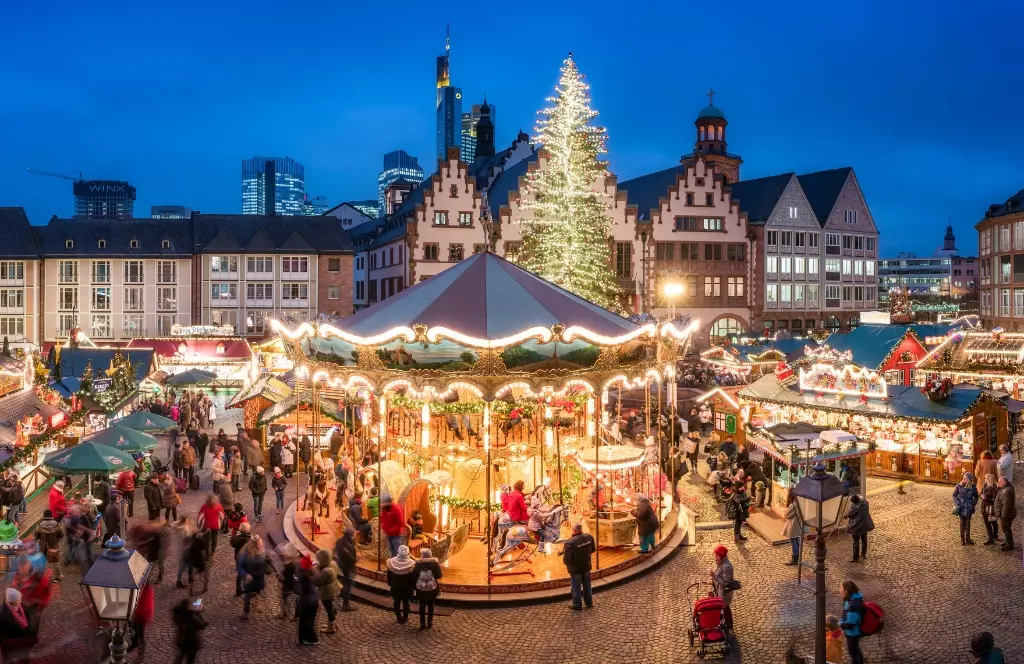
If you're thinking about taking a festive holiday this year, you should seriously consider spending Christmas in Germany.
Not only does the country have some of Europe's best Christmas markets, rich seasonal food and open-air ice rinks in the middle of historic squares, it also has Christmas traditions that have been handed down for generations and are still very much alive.
In this guide we'll cover how Christmas is celebrated in Germany, the German Christmas traditions worth planning around, and the best places to spend Christmas in Germany in 2026, which are:
What To Know About Christmas in Germany
Is Germany a good place to go for Christmas?
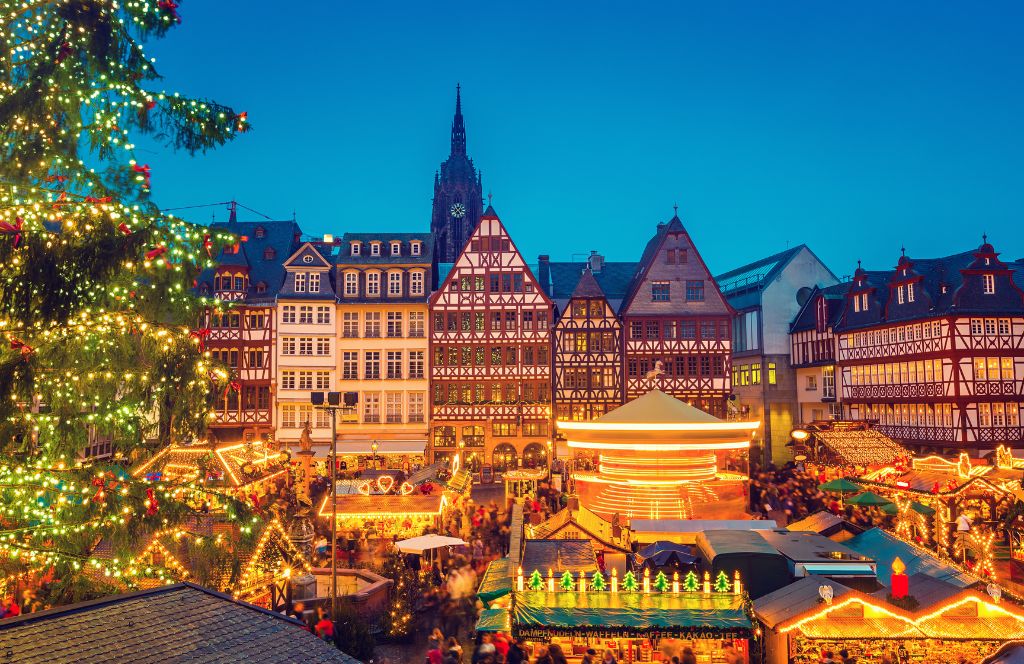
Yes. Germany is one of the strongest Christmas destinations in Europe, and it works for very different kinds of trip. Cities like Nuremberg, Cologne and Munich give you historic centres in full festive swing, while smaller places like Rothenburg ob der Tauber and Breitnau are quieter and more picturesque. Between mulled wine at the markets, cathedrals and museums, and the food, it holds up whether you're travelling with kids, as a couple, or on your own.
Do Germans celebrate Christmas for 3 days?
Yes, Christmas in Germany runs across three days. It begins on December 24th with Christmas Eve (Heiligabend), when families exchange gifts and many attend a church service. December 25th, Christmas Day (Erster Weihnachtstag), is a public holiday spent at home with family. December 26th, known as Zweiter Weihnachtstag, is also a public holiday, usually given over to visiting extended family or doing very little at all.
Why do Germans celebrate Christmas on the 24th?
In Germany, Christmas Eve (Heiligabend) is the main event. Christmas is understood to begin on the evening of December 24th, so that is when families gather for the big meal, open their Christmas presents and go to church. If you are buying for someone celebrating this way, personalised Christmas gifts and Christmas gift vouchers both work well, because they arrive in time for the 24th without needing to be posted. The 25th and 26th are for resting and seeing relatives, which is close to the reverse of how most American families run the holiday.
What do Germans call Santa?
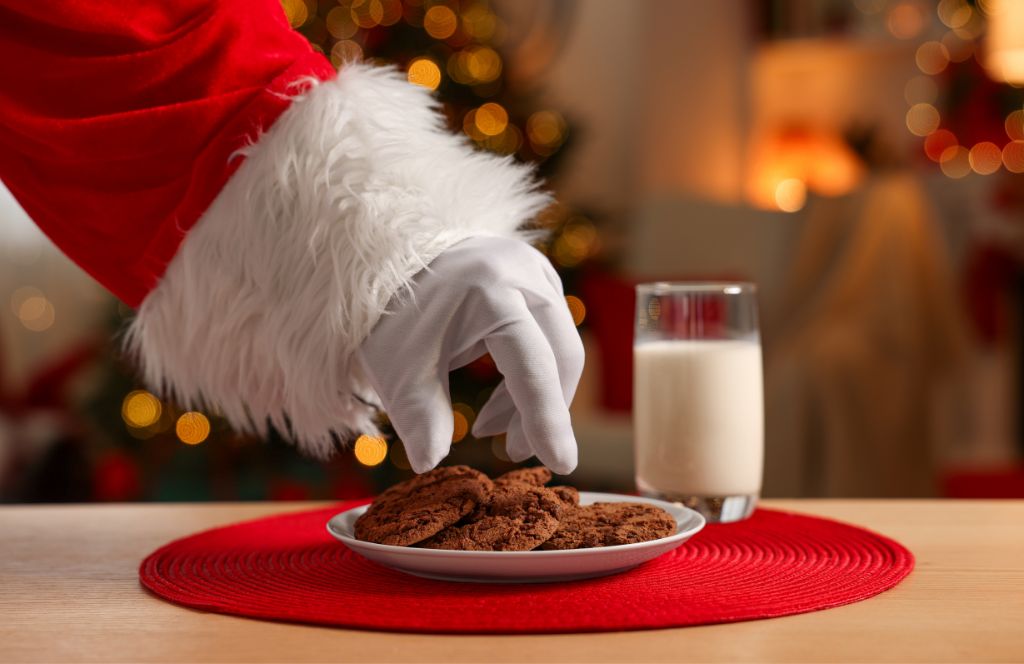
Germans call Santa Claus "Der Weihnachtsmann", which translates as "The Christmas Man". He works much as Santa does elsewhere, visiting children on Christmas Eve with presents. In some regions, particularly Catholic ones, gifts are instead attributed to the Christkind, a Christ-child figure who also opens the Nuremberg market each year.
What is the bad Santa tradition in Germany?
Germany's Krampusnacht, or Krampus Night, features a horned figure called Krampus who accompanies St. Nicholas on the evening of December 5th. Where St. Nicholas rewards well-behaved children, Krampus is there to frighten the rest. In Alpine regions especially, the tradition plays out as a noisy street parade of costumed Krampusse, and it is worth seeking out if you happen to be in the south at the start of December.
What do Germans say instead of "Merry Christmas"?
"Frohe Weihnachten" is the standard greeting, and "Frohes Fest" is a slightly more casual version you'll hear a lot at markets. Around New Year, people switch to "Guten Rutsch", which roughly means "a good slide" into the new year. Saying any of them badly is fine; it is usually met with a smile and an immediate switch to English.
How a German Christmas Differs from an American One
If you're flying in from the US, a few differences are worth knowing before you book, because several of them affect how you should plan your days.
- The main event is the evening of the 24th, not the morning of the 25th. Gifts are opened on Christmas Eve. If you want to see Germany at its most festive, the 24th is the day to be somewhere, not the 25th.
- Christmas markets close before Christmas does. Most markets wind down shortly before Christmas Eve rather than running through to New Year, so a trip planned for the week between Christmas and New Year can miss them entirely. Check the closing date of the specific market you're travelling for.
- The 25th and 26th are both public holidays. Shops and most restaurants close, and public transport runs a reduced service. Book Christmas dinner in advance or stay somewhere that serves it.
- Advent is a season, not a countdown. The festive period starts four Sundays before Christmas and is marked weekly at home with the Adventskranz. Arriving in early December means markets in full flow and far more atmosphere than the last-minute rush.
- It is less about lights on houses, more about public space. German towns put their effort into squares, town halls and markets rather than residential displays, so the festive part of the trip happens outdoors and on foot.
- Snow is not a given. Southern Germany and the Alps have the best chance of it; Cologne, Frankfurt and Berlin are more likely to be cold and grey than white.
The Most Popular Germany Christmas Traditions
Christmas in Germany is built on traditions that have been passed down through generations, from the start of Advent through to Epiphany in January. These are the ones you're most likely to run into as a visitor.
- Christmas Markets (Weihnachtsmärkte): the centrepiece of the season, with wooden stalls, handmade crafts, brass bands and food like bratwurst and roasted almonds.
- Advent Calendars: a German invention, with a small gift or chocolate behind each door in the run-up to Christmas Eve.
- Advent Wreath (Adventskranz): families light one candle on each of the four Sundays before Christmas.
- St. Nicholas Day (Nikolaustag): on December 6th, children leave their boots out overnight and find sweets and small gifts in them.
- Christmas Tree (Tannenbaum): traditionally decorated on Christmas Eve itself rather than weeks beforehand.
- Christmas Eve Celebration (Heiligabend): dinner, carols and presents on December 24th.
- Christmas Cookies (Plätzchen): baked in large batches through December and shared with neighbours and colleagues.
- Glühwein: hot spiced wine, served in a souvenir mug you pay a deposit on and can either return or keep.
- Epiphany (Dreikönigstag): on January 6th, children dressed as the Three Kings sing carols door to door and chalk a blessing above the doorway, closing the season.
Typical German Christmas food
German Christmas food is built around comfort and long lunches. The centrepiece is usually roast goose (Weihnachtsgans), duck, or in some regions carp, served with red cabbage and potato dumplings, alongside sauerkraut, gravy and chestnut stuffing. The sweet side is just as important: buttery Lebkuchen and Plätzchen, and Stollen, the dense fruit bread dusted with icing sugar that Dresden is famous for. Wash it down with Glühwein at the market. Much of it is regional, so what lands on the table in Bavaria is not what lands on it in Hamburg.
The Best Places to Spend Christmas in Germany
Germany rewards picking one base and going deep rather than city-hopping. These ten are the ones worth building a trip around, from the big historic markets to a village in the Black Forest.
1. Nuremberg
First on our list of the best places to spend Christmas in Germany is Nuremberg.
It is famous for its Christkindlesmarkt, but the city's winter appeal runs well past the market itself. Medieval walls, wooden stalls and the local gingerbread (Lebkuchen) make the old town feel like a different century for a few weeks. The season opens with the Christkind delivering a prologue from the balcony of the Church of Our Lady, which is worth timing your arrival around.
Our Hotel Pick for Christmas in Nuremberg
To be in the middle of it, stay at the Dürer Hotel Nürnberg. It sits in the heart of the Old Town, a short walk from the market and the castle, and it is small enough to feel like somewhere rather than anywhere.
2. Rothenburg ob der Tauber
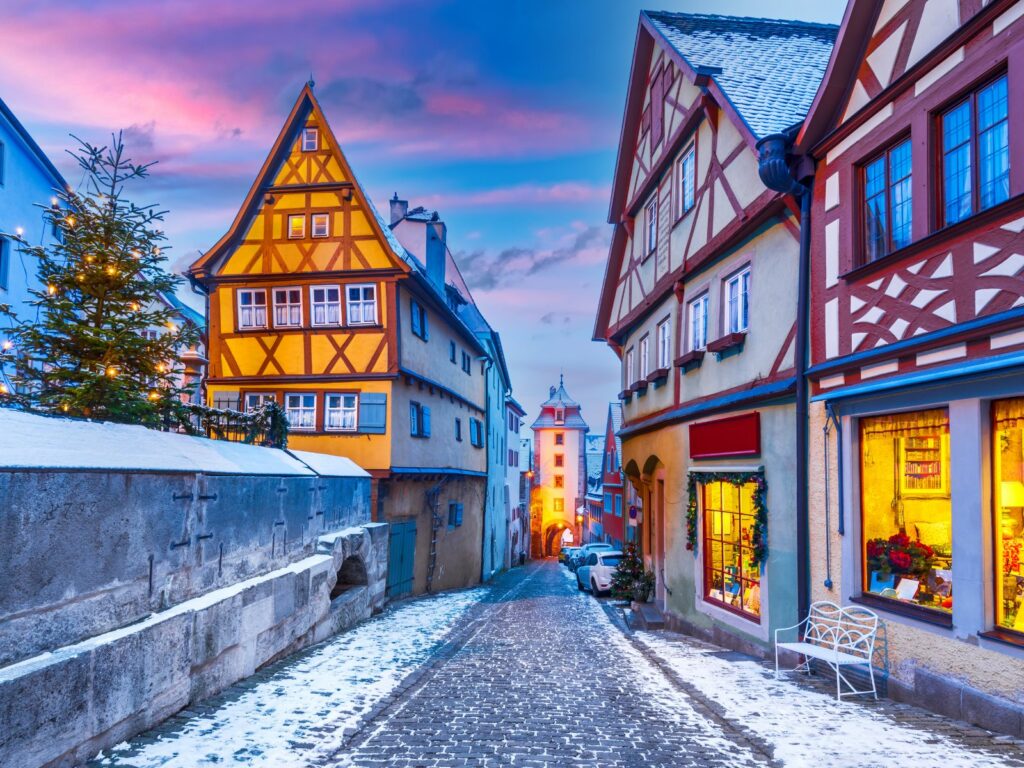
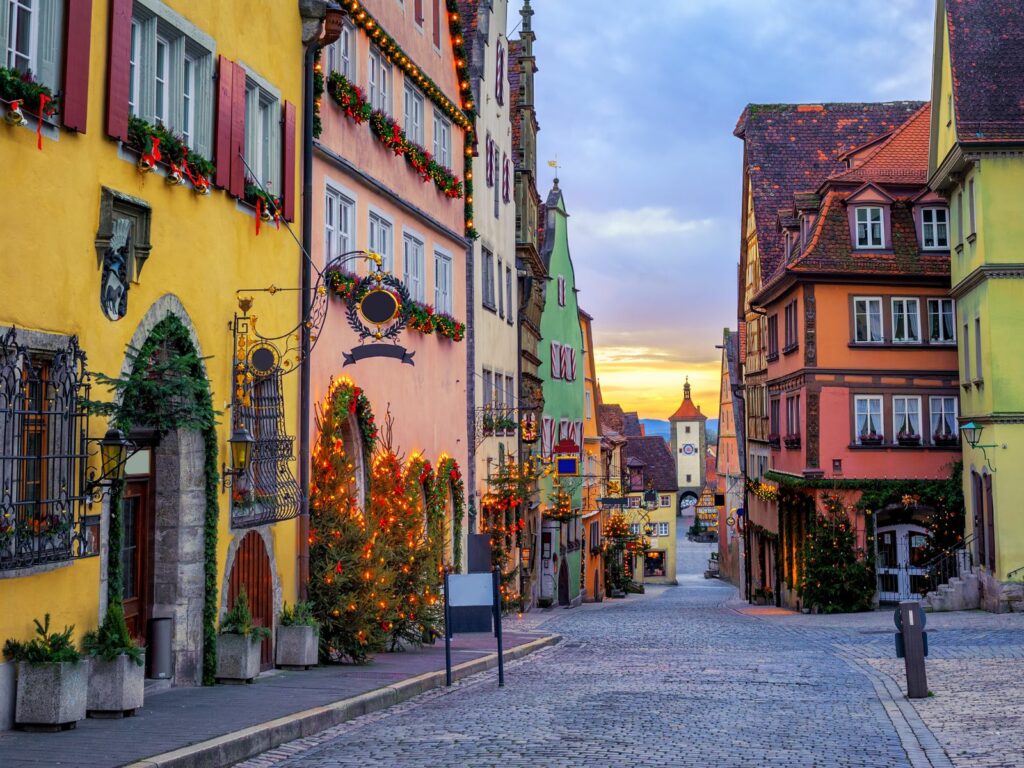
For a medieval Christmas, base yourself in Rothenburg ob der Tauber. This walled Bavarian town is all half-timbered houses and cobbled lanes, is among the best-preserved in Germany, and is a favourite Christmas destination for couples.
The Reiterlesmarkt is one of Germany's oldest Christmas markets and opens before the first Advent Sunday. It runs between the Market Square and the Church Square and typically fields more than 50 stalls of local crafts. Once you've walked the stalls, head to the Town Hall, where the windows are given over to Christmas artwork by local children.
Our Rothenburg ob der Tauber Hotel Pick
Stay at Hotel Herrnschloesschen in the old town. You'll be steps from the Church of St. Jakob and about a five minute walk from the Town Hall, which puts the whole town within reach on foot.
3. Cologne
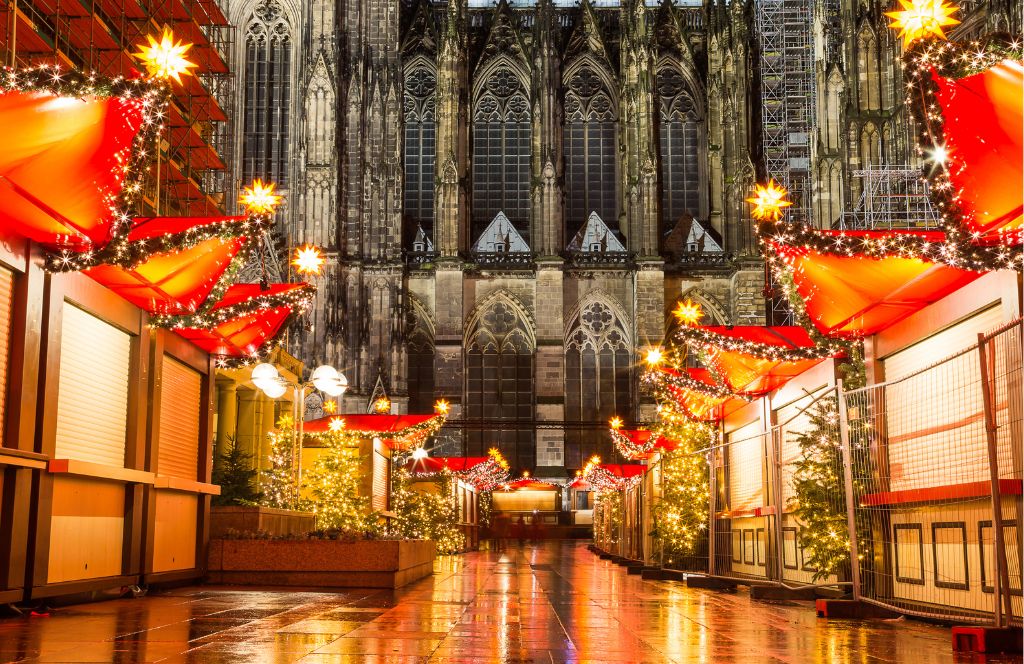
Cologne is the big-city option for Christmas in Germany in 2026.
The Cologne Cathedral is worth the trip on its own, and the market that sets up in its shadow is one of the most visited in Europe. Beyond that, the Rhine promenade is a good cold-weather walk, the riverside cafes do a solid Glühwein, and the city's museums give you somewhere to go when the weather turns. It is also the easiest city on this list to reach and to use as a base, with several other Christmas markets in Germany within a short train ride.
Our Cologne Hotel Pick
Book a room at the Excelsior Hotel Ernst am Dom, directly beside the cathedral. Ask for a cathedral view, and eat at least once at the hotel's Michelin-starred restaurant while you're there.
Related reading: prepare for your trip to the city thanks to our 2026 guide to the Cologne Christmas market.
4. Dresden
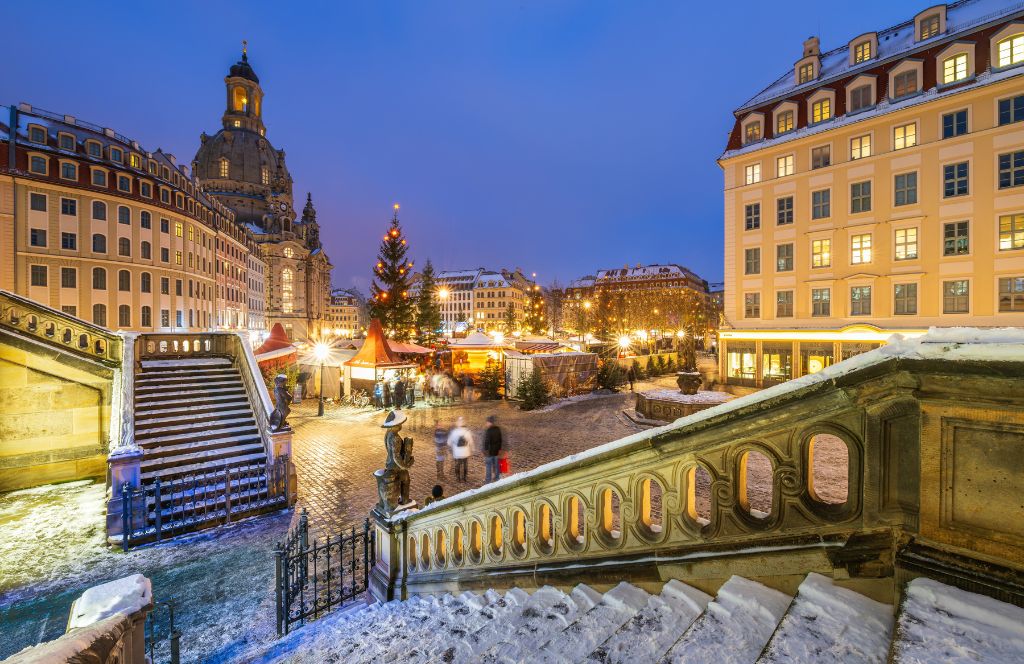
Dresden claims the oldest Christmas market in the country, the Striezelmarkt, and the city's baroque centre gives it a backdrop the others can't match.
Visit the Frauenkirche and go up to the observation deck for the view over the rooftops, then work your way through the city's museums and theatres. This is also the home of Stollen, and the city makes a proper occasion of it.
Our Hotel Pick for Christmas in Dresden
For a grand stay, book the Hotel Taschenbergpalais Kempinski. It is a restored baroque palace in the middle of the old town, with the markets a few minutes' walk away and an ice rink in the courtyard in season.
5. Munich
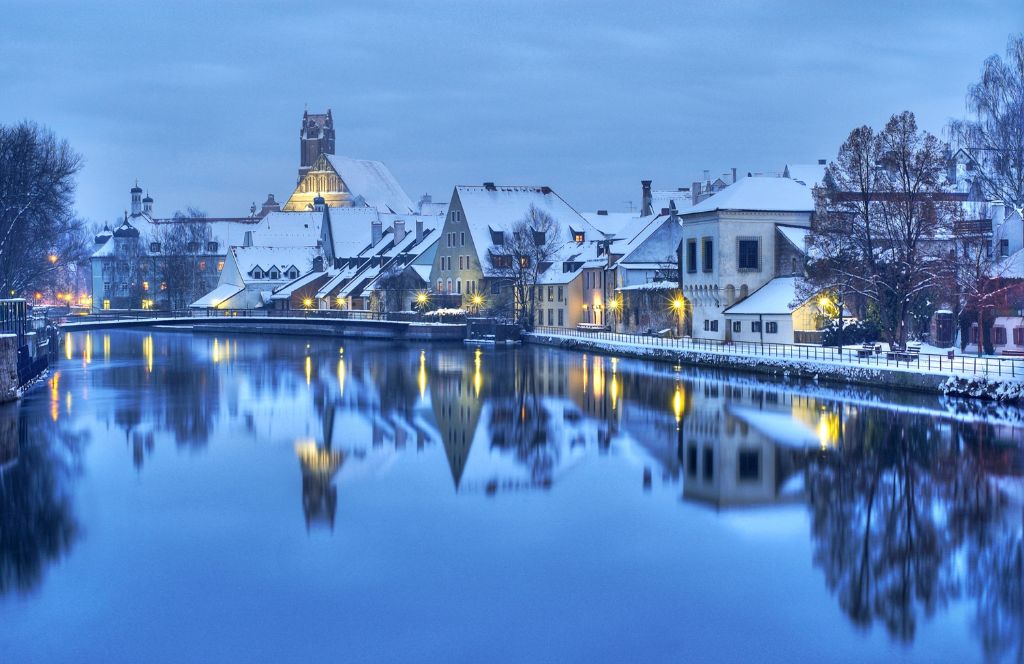
Better known for Oktoberfest, Munich is an excellent winter holiday destination for a long list of reasons.
The Marienplatz market sits directly beneath the Glockenspiel in the heart of the city, and the whole square fills up from late afternoon onwards.
Beyond the market, Munich gives you the most to do when you want to be indoors: world-class museums, theatres and beer halls serving Bavarian food that is built for the cold. It is also the best jumping-off point on this list for the Alps if you want to add a few days of snow to the trip.
Our Hotel Pick for Spending Christmas in Munich
Stay at the Hotel Vier Jahreszeiten Kempinski München. It is a Munich institution, with rooms overlooking the Maximilianstrasse, a spa for after a long day on your feet, and a short walk to Marienplatz.
6. Düsseldorf
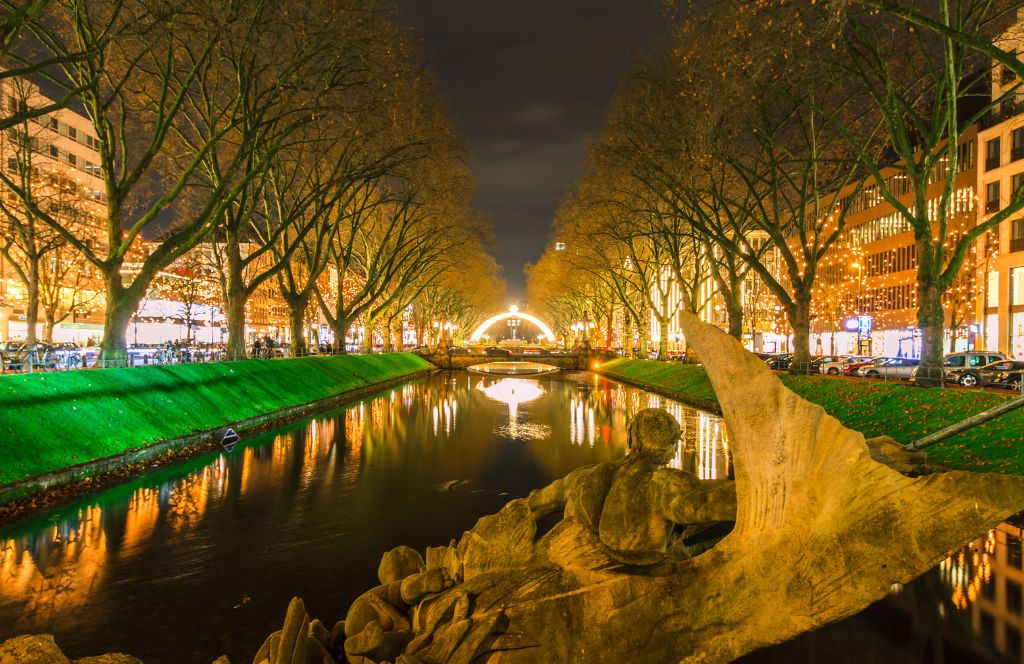
Düsseldorf spreads its Christmas markets across the old town rather than concentrating them in one square, so the whole centre is worth walking.
The Königsallee boulevard is lit end to end, and the Engelchenmarkt at Heinrich-Heine-Platz, decorated with angels, is the quietest and prettiest of them.
Additional Activities in Düsseldorf
- Walk the Rhine River Promenade after dark, when the festive lights reflect off the water.
- Visit the Kunstpalast Museum for its collection of paintings and glass.
- Skate at the Corneliusplatz rink in the middle of the shopping district.
Where to Stay in Düsseldorf
Stay at the Breidenbacher Hof, a Capella Hotel. It is in the centre, a few minutes from the markets and the Königsallee, and the service is the reason people go back.
7. Stuttgart
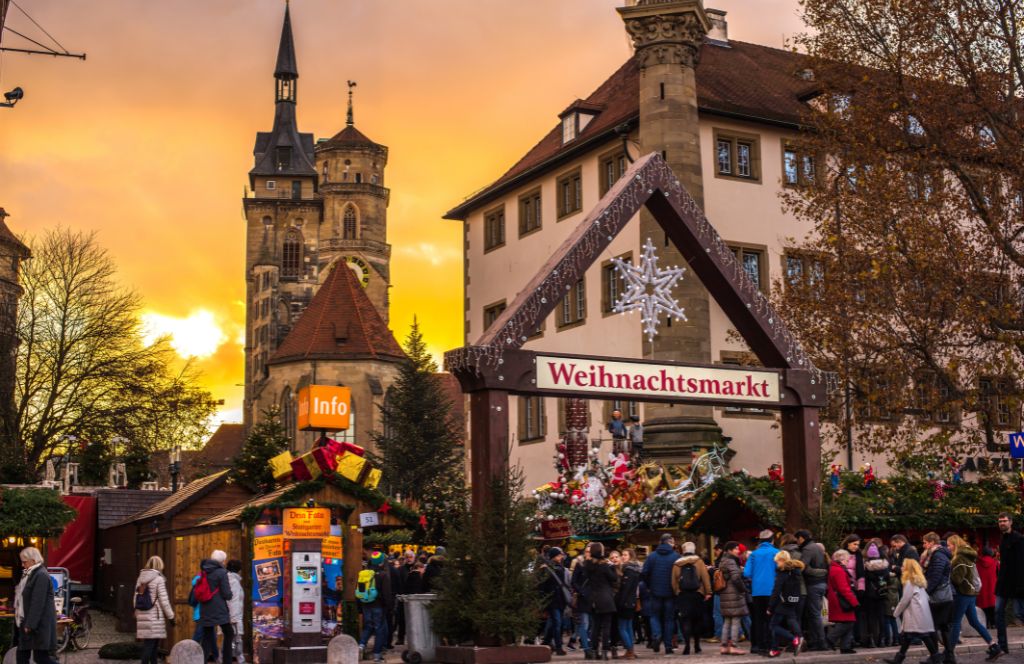
Stuttgart runs one of the largest Christmas markets in Europe.
The thing people remember is the stall roofs, which local traders decorate competitively with scenes, lights and figures. The squares around the Schlossplatz and the Old Castle fill with them, and the smell of roasted chestnuts carries across the whole centre.
There is also a children's fairy-tale land with a miniature railway, which makes Stuttgart an easy choice if you're travelling with young kids. When you've had enough of the market, the city has enough museums and parkland to fill a couple of days on its own.
Additional Activities in Stuttgart
- Visit the Mercedes-Benz Museum and work through the history of the brand from the first car onwards.
- Explore the Stuttgart Art Museum and its collection of modern and contemporary work.
- Walk the Wilhelma Zoo and Botanical Garden, which keeps its glasshouses warm and open through the winter.
Our Stuttgart Hotel Pick
Book the Althoff Hotel am Schlossgarten, next to the Schlossplatz. It looks out over the palace gardens and puts you a minute's walk from the market.
8. Breitnau
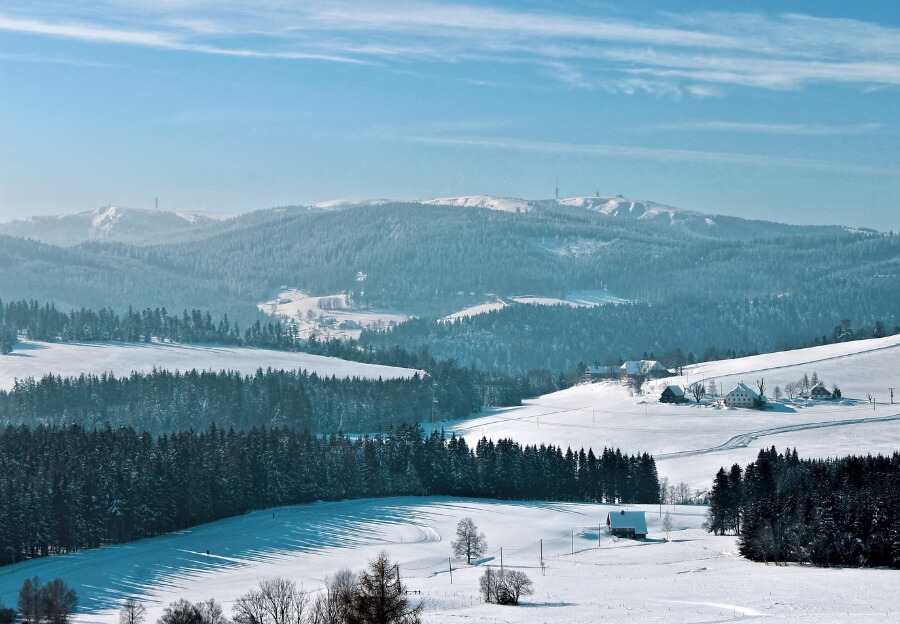
Breitnau is the Black Forest option, and the change of pace is the point.
It is a small village with a good chance of real snow, and the Ravennaschlucht Christmas market nearby is set in a gorge underneath a railway viaduct, which is as close to a film set as a German market gets. It runs on selected weekends rather than daily, and tickets are limited, so this one needs planning around rather than dropping in on.
Additional Activities in Breitnau
- Hike the Black Forest trails, which are at their best under snow.
- Watch glassblowers at the Hofgut Sternen Glassblowing Studio and pick up an ornament made in front of you.
- Book a spa afternoon; the region's hotels do this well and it is the right way to end a cold day.
Our Breitnau Hotel Pick
Stay at Hofgut Sternen, a historic inn in the heart of the Black Forest and a short walk from the gorge.
9. Mosel
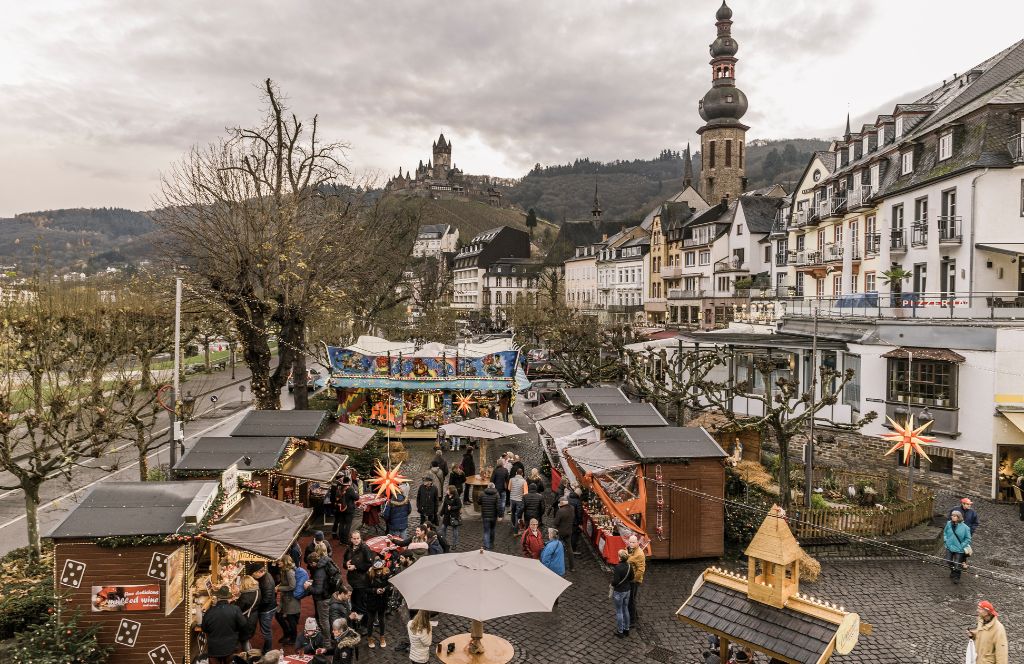
The Mosel valley is the quiet one on this list.
The markets in towns like Cochem and Bernkastel-Kues are small and local, set against medieval streets and vineyards running up the slopes behind them. If your idea of a good Christmas trip involves Riesling and a river rather than crowds, this is the one.
Additional Activities in Mosel
- Take a boat along the Mosel River for the view back at the terraced vineyards.
- Visit Reichsburg Castle in Cochem, which looks its best lit up above the town.
- Book a tasting in one of the old wine cellars and work through the region's Rieslings.
Where to Stay in Mosel Germany for Christmas
Choose the Weinromantikhotel Richtershof in Mülheim, a converted wine estate with good food and easy access to the valley's markets and vineyards.
10. Essen
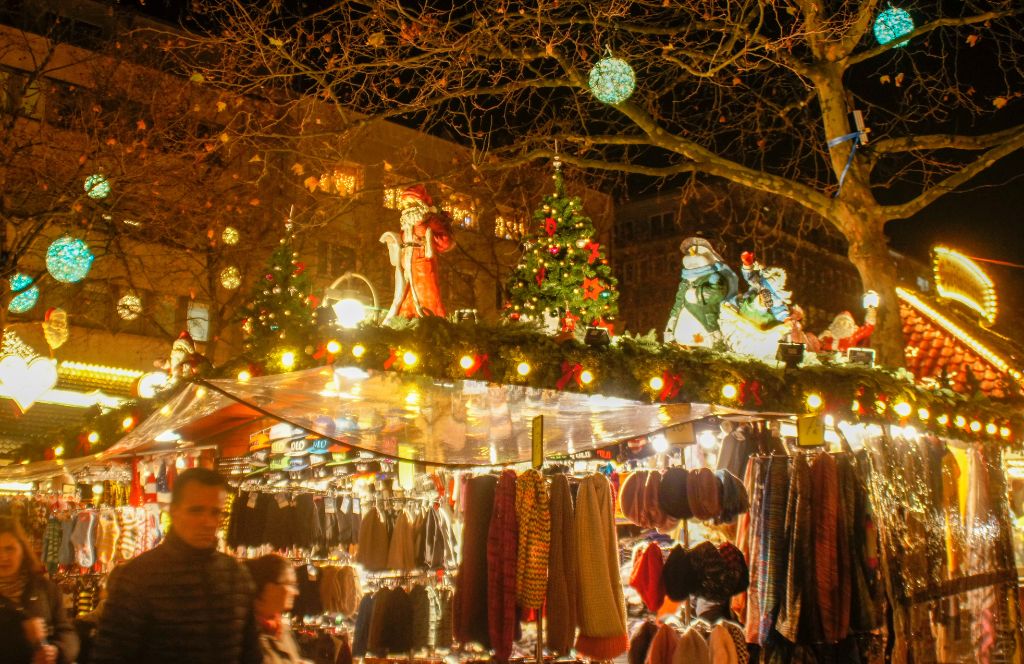
Essen is the one that surprises people.
Its Christmas market runs right through the city centre and is known for its light displays and its international stalls, and the Zollverein Coal Mine Industrial Complex, a UNESCO World Heritage site, hosts its own market in a decommissioned colliery, with an ice rink laid out between the old coking plant ovens. Industrial heritage and Christmas lights is an odd combination on paper and a very good one in person.
Additional Things to do in Essen
- Visit the Museum Folkwang and its collection of nineteenth and twentieth century art.
- Tour the Zollverein complex and see how the site was built and then rebuilt as a cultural quarter.
- Walk the Grugapark, which is decorated and lit through the holiday season.
Where to Stay in Essen for Christmas
Book the Atlantic Congress Hotel Essen, near the Grugapark and within easy reach of the markets.
Planning Your Christmas Trip to Germany
A few practical things decide whether this trip works, and most of them come down to dates.
- When to go. The sweet spot is the first three weeks of December. Advent begins four Sundays before Christmas, the markets are open daily by early December, and you get the full run of them without the closures that hit the week of Christmas itself. If you want to be in Germany for Heiligabend, plan to arrive several days before, not on the 23rd.
- Check each market's dates before you book anything. Opening and closing dates vary by city and change from year to year, and most markets close before Christmas Eve rather than running into the new year. Every city has an official market site with the current year's dates on it, and that is the thing to confirm first, before flights and before hotels.
- Where to fly into. Frankfurt and Munich are the two biggest gateways from the US, and both put several cities on this list within a couple of hours by train. Cologne and Düsseldorf are quick from Frankfurt; Nuremberg and Rothenburg are easiest from Munich. Germany's rail network does the rest, and it is a far better way to city-hop in December than driving.
- What to pack. Layers, waterproof shoes and gloves. Daytime temperatures usually sit somewhere around 32 to 45 °F (0 to 7 °C), and you'll be standing outside in it for hours at a time.
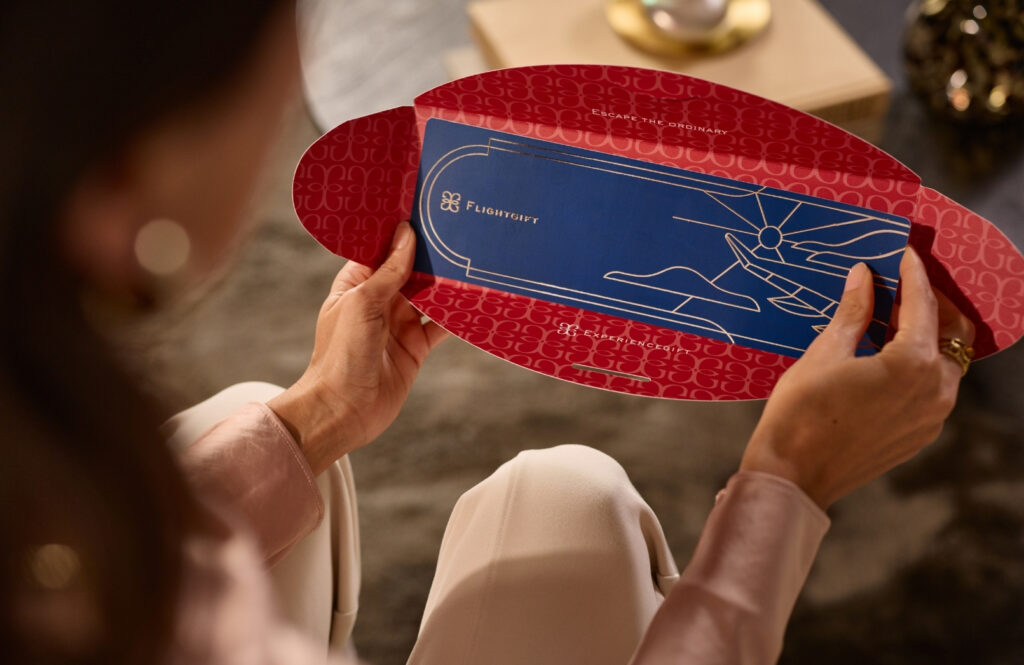
- If you're giving the trip rather than taking it, a Flightgift card lets the recipient choose their own dates and route, which matters more for a Christmas trip than most, because the right week depends on their time off rather than yours.
Will you spend Christmas in Germany in 2026?
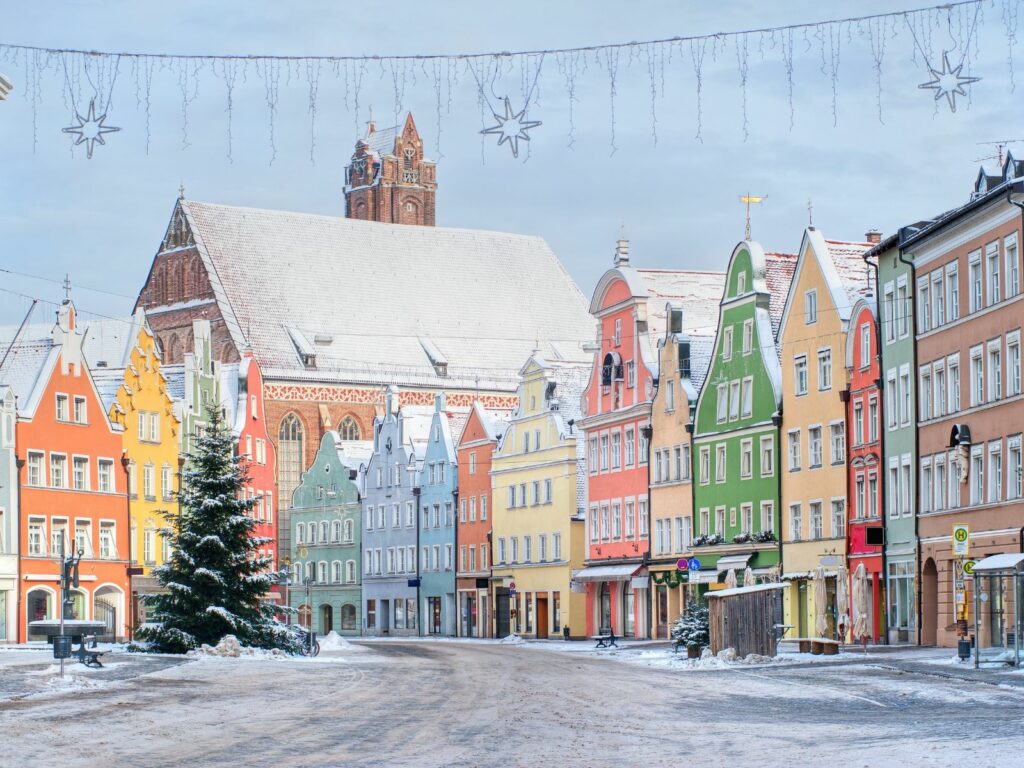
These ten cities each give you a different version of the same season, from a market under a Black Forest viaduct to a cathedral square packed with people drinking Glühwein at four in the afternoon. Whether you want the historic set-piece, a quiet valley or a city you can spend a week in, Germany at Christmas is worth building a trip around, and it pairs easily with the rest of Europe's winter destinations if you want to extend the trip.
Experience Christmas in Germany with Flightgift
Ready to start your Christmas shopping? With the holidays a few weeks out, this is the point in the year to swap things for experiences.
Know someone who would rather have the trip than another gadget? A Flightgift airline gift card lets them book their own flight, to Germany's Christmas markets or anywhere else, on the airline and the dates they choose.
For a physical gift under the tree, you can customise a Flightgift card with your own photo and message and have it shipped to you. If you'd rather leave the whole category open, an Experiencegift card covers flights, hotels, rail and activities in one.
Give the trip, not the thing. Flightgift, by Experiencegift.
FAQs About Spending Christmas in Germany
When do Christmas celebrations start in Germany?
The German holiday season officially begins with Advent, four Sundays before Christmas. Things get properly festive from early December, with St. Nicholas Day on December 6th, and most families do their gift-giving on Christmas Eve, December 24th. December 25th and 26th are both public holidays, so expect shops to close and families to gather.
What are the most traditional German Christmas foods?
Look out for Lebkuchen (spiced gingerbread), Stollen (a dense fruit bread), roast goose on Christmas Eve, and bratwurst with sauerkraut at the markets. And a mug of hot Glühwein, which is as much a part of the experience as anything on a plate.
What can I expect at German Christmas markets?
Weihnachtsmärkte appear in almost every city and village. Expect wooden stalls selling handmade gifts and ornaments, brass bands and choirs, nativity scenes, and a lot of food. Some markets, including those in Nuremberg and Dresden, have been running for hundreds of years.
Are there big differences between regions in Germany?
Yes, each region has its own character. Bavaria leans hearty, with beer halls open through the winter. The Black Forest looks like a Christmas card. Northern cities like Hamburg give their markets a maritime twist. Even the gift-bringer changes: Der Weihnachtsmann in much of the north, the Christkind in the Catholic south.
Will there be snow at Christmas?
It depends where you go. Southern Germany, the Alps and higher ground have the best chance. In Berlin, Frankfurt or Cologne you are more likely to get cold and grey than white. Daytime temperatures usually hover around 32 to 45 °F (0 to 7 °C).
Is Christmas in Germany good for kids?
Very. St. Nicholas Day, when children leave out shoes to be filled with treats, lands early in the trip, and the markets run carousels, toy stalls and children's areas with storytelling and crafts. Stuttgart's fairy-tale land is built for it.
What are some must-try winter drinks and snacks?
Beyond Glühwein, look for Feuerzangenbowle (mulled wine with a rum-soaked sugarloaf set alight over it), hot chocolate with a shot of rum, roasted chestnuts, pretzels, candied almonds and Reibekuchen (potato pancakes with apple sauce). All sold hot, which is the point.
Are shops and restaurants open on Christmas Day?
Most shops, supermarkets and many restaurants close on December 25th and 26th, as both are public holidays. Plan ahead if you need anything. Hotels usually serve Christmas meals for guests and some attractions stay open, but the pace slows right down.