



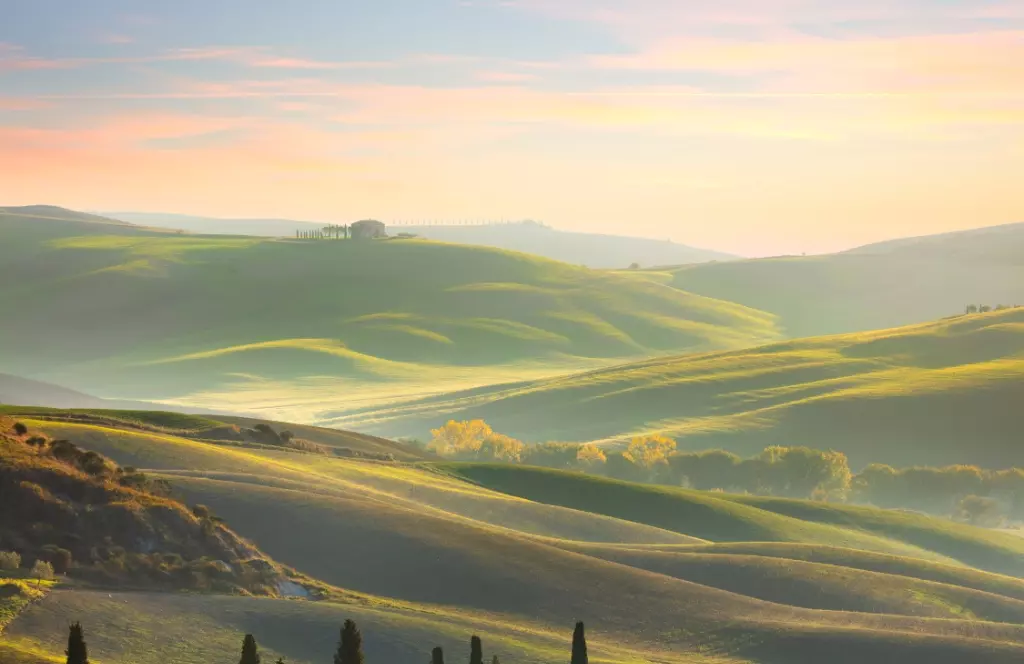
Is May a good month to visit Europe?
May is the single best month to travel in Europe if you care about price, weather, and crowds all at once. Southern Europe (Spain, Greece, Italy, Portugal, Cyprus, Malta) sits between 65°F and 80°F, northern picks like Amsterdam and the Scottish Highlands stay cooler at 50°F to 68°F, and daylight runs 15+ hours across most of the continent. Flights from the US are 20 to 35% cheaper than July and August, hotel rates haven't peaked yet, and the major attractions (Acropolis, Alhambra, Sagrada Família) have short enough lines that you don't have to dedicate a whole morning to queuing.
But May 2026 has four quirks that reshape where you should, and shouldn't, go. This guide lays out 16 destinations worth the trip, plus a shortlist of places to actively avoid on specific dates.
What's in this guide
The 4 things that make May 2026 different
Most travel guides treat May as a generic shoulder month. For 2026, four specific calendar events reshape the decision:
1. Eurovision 2026 is in Vienna (10 to 17 May)
The Grand Final is Saturday 16 May at the Wiener Stadthalle, with semifinals 12 and 14 May and an opening Turquoise Carpet on 10 May. Vienna hotel rates triple or quadruple that week. If Vienna is on your list, either book before December 2025 or travel a different week in May.
2. Cannes Film Festival runs 12 to 23 May
The 79th Cannes Film Festival overlaps almost exactly with Eurovision week, and the ripple hits the entire Côte d'Azur. Nice hotels jump 40 to 60% from 12 to 23 May. Monaco Grand Prix (typically the following weekend) adds another surge. For French Riviera travel, aim for the first 10 days of May.
3. EES biometric checks are now fully mandatory
The EU Entry/Exit System went fully live on 10 April 2026, so May is the first "normal" month of biometric border processing for US travelers. On your first entry to any Schengen country, every member of your party gets fingerprinted and photographed at the border. No fee, no advance registration, but allow an extra 60 to 90 minutes at arrivals, particularly at Madrid-Barajas, Barcelona-El Prat, Rome-Fiumicino, and Paris-CDG. ETIAS (the separate travel authorization) does not launch until the last quarter of 2026.
4. Venice charges a day-tripper fee on 15 May dates
Venice's day-tripper access fee is active on 1, 2, 3, 8, 9, 10, 15, 16, 17, 22, 23, 24, 29, 30, and 31 May 2026 from 8:30am to 4pm. Day visitors pay $5 (€5) booked 4+ days ahead, or $10 (€10) last-minute. Overnight hotel guests are exempt but still must register for an access pass. This single rule is the main reason we've pulled Venice out of our "go" list for May 2026 and placed it in the avoid section below.
Best May destinations for warm weather
1. Valencia, Spain

Average temperature: 54°F to 73°F
Recommended stay: 3 days
2026 tourist tax: None (Valencia region applies no regional tax)
Valencia in May is warm enough for the beach but not hot enough to regret a midday walk through the old town. The City of Arts and Sciences is the headline attraction (the Oceanogràfic aquarium alone takes half a day), but the real highlight is how affordable it is compared to Barcelona. A wood-fired paella for two at a beachfront restaurant runs about $30 to $40 total. If you're watching your budget, this is a city where eating well is not a compromise.
The center of the city blends Roman, Arab, Christian, and modern architecture in a way that few European cities manage. Try horchata, the local sweet drink made from tiger nuts (chufas), at any traditional café. The Turia Gardens, a 5.5-mile park built in a drained riverbed, cuts through the entire city and is where locals jog, bike, and picnic on weekends. Malvarrosa beach is clean and swimmable by late May.
What to eat: Paella Valenciana (the original version, with rabbit and chicken, not seafood), arroz negro (black rice with squid ink), and fideuà (similar to paella but made with noodles instead of rice). Pair with a tinto de verano and you have the perfect Valencian meal.
Where to eat:
- Casa Carmela: The place for authentic wood-fired Valencian paella. Book ahead.
- Ricard Camarena: Michelin-starred, using produce from the chef's own garden.
- Central Bar: Inside the Mercado Central; high-quality tapas at market prices.
Where to stay (bookable via Hotelgift):
- Hospes Palau de la Mar: 19th-century palace near the historic center. From $250/night.
- MYR Palacio Vallier: Top-tier luxury with strong service. From $210/night.
- Hotel Las Arenas Balneario Resort: Best option if you want beach access and a sea view. From $200/night.
2. Athens, Greece
Average temperature: 61°F to 77°F
Recommended stay: 2 to 3 days
2026 tourist tax: $0.50 to $4 (€0.50 to €4) per night, paid at hotel
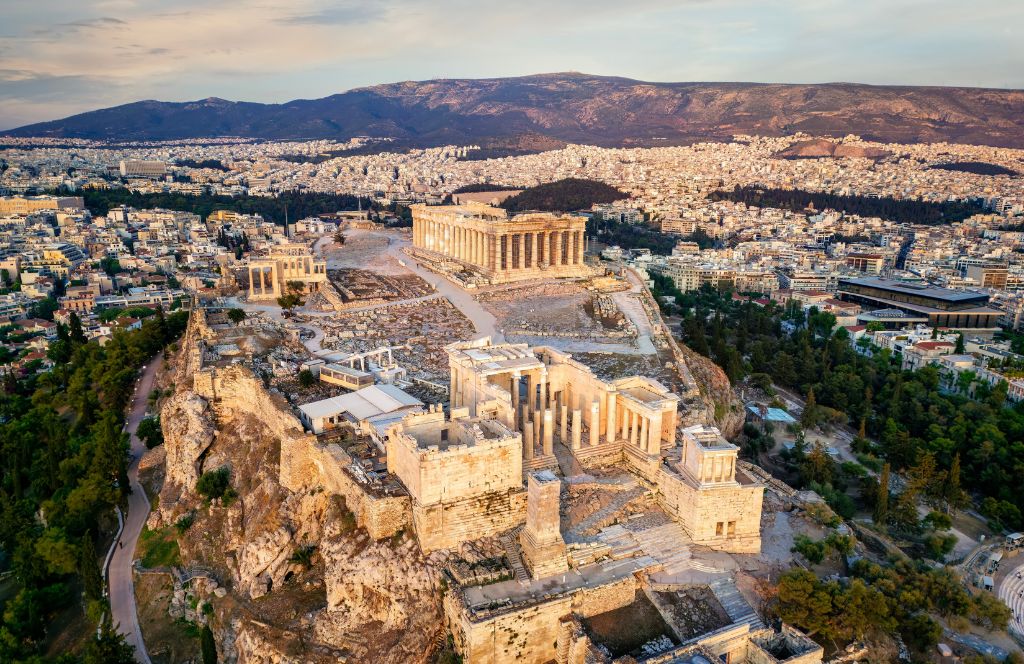
Climbing to the Acropolis at 9am with a light breeze and 75°F instead of the 100°F oven that July and August turn it into is the difference that makes May in Athens worth booking. You actually enjoy the walk. You can stop, take photos from every angle, and still have energy left for a lunch in Plaka afterward.
Athens is essentially one giant open-air museum, with layer on layer of history from the ancient Parthenon and the Roman Agora to the Ottoman-era streets of Plaka and the graffiti-covered neighborhoods of Exarchia and Psyrri. It's a city that doesn't try to look polished, but it has a character that gets under your skin.
Neighborhoods worth exploring:
Plaka: The oldest neighborhood in Athens, right at the foot of the Acropolis. Narrow pedestrian streets, neoclassical houses, souvenir shops, and tavernas. It can feel touristy by day, but in the evening for dinner it has a completely different energy.
Monastiraki: The flea market area, with everything from vintage records to handmade leather sandals. The square has a direct view of the Acropolis and is where locals actually hang out on a Sunday morning.
Psyrri: Just behind Monastiraki, this is the nightlife and alternative dining district. Street art on every wall, cocktail bars in old warehouses, and some of the best souvlaki in the city.
What to eat: Souvlaki (grilled meat in pita with tzatziki, about $5 a plate), spanakopita (spinach and feta pie, $2 at any bakery), moussaka, grilled octopus, and lamb chops. Avoid the tourist traps around Syntagma Square and head to where Greeks actually eat.
Where to eat:
- Spondi: Two Michelin stars; Greek-French fusion at its best. Book weeks ahead.
- ManiMani: Modern Peloponnese cooking in a relaxed setting. Excellent lamb dishes.
- O Thanasis: The souvlaki and kebab spot near Monastiraki that locals go to. Under $10 a person.
Where to stay (bookable via Hotelgift):
- Electra Metropolis: Rooftop pool with Acropolis views. From $250/night.
- Pame House: Budget-friendly, 5-minute walk from Monastiraki Flea Market. From $90/night.
3. Crete and the Greek Islands
Average temperature: 63°F to 75°F
Recommended stay: 5 to 7 days
2026 tourist tax: $0.50 to $4 (€0.50 to €4) per night, paid at hotel
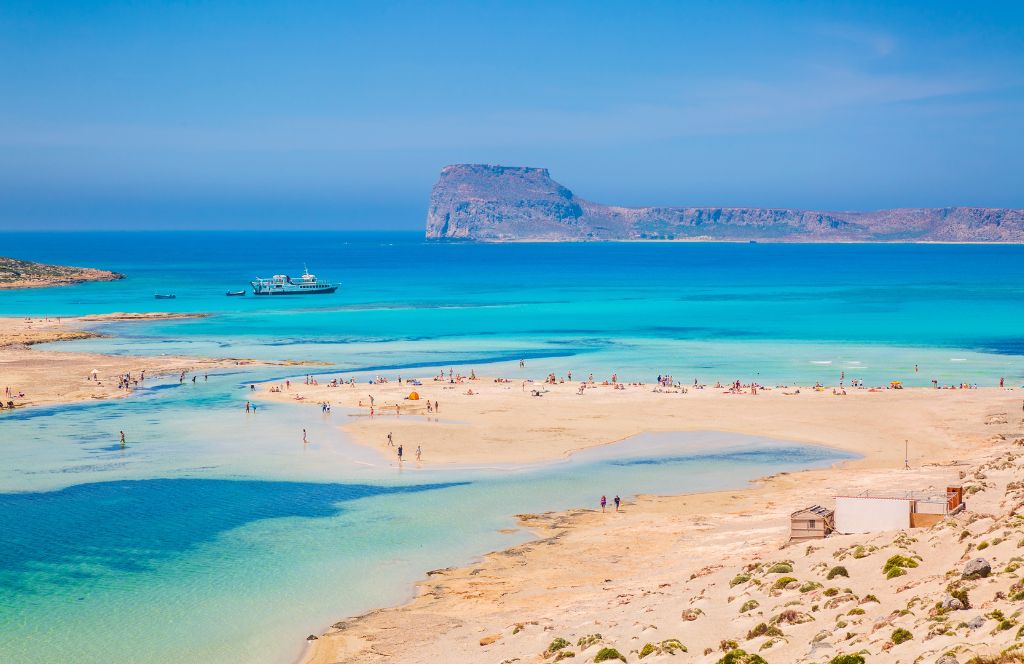
May is the sweet spot for the Greek islands: warm enough to swim (the sea hits 66°F by late May), cheap enough that a week on Crete costs less than three days in Santorini in August, and early enough that ferries aren't packed and restaurants aren't turning walk-ins away.
Crete is our pick for a first island. It's the largest, has two strong cities (Heraklion and Chania), real archaeology (Knossos), and some of the best beaches in Greece (Elafonissi and Balos are both walkable in May when you'd wait 2 hours for a sun lounger in August).
Santorini in May is still the Instagram version of Greece (white buildings, blue domes, red cliffs) but without the cruise ships unloading 10,000 people a day. Stay in Oia for sunset, eat in Pyrgos for prices that aren't 4x the mainland.
Corfu is the green one: pine forests, Venetian architecture, and Italian-Greek food because the island was Venetian for 400 years. Less well known, which in May means you can still find a harbor taverna that hasn't been bought out by a chain.
What to eat: Fresh fish off the morning boats (especially sea bream and sea bass), dakos (Cretan rusks with tomato and feta), kleftiko (slow-roasted lamb), and honey over Greek yogurt for breakfast. Cretan raki is the local spirit; every taverna gives you a free shot after dinner.
Where to eat:
- Peskesi (Heraklion, Crete): Farm-to-table Cretan cooking sourced from the restaurant's own farm. Around $35 per person.
- Metaxi Mas (Santorini): The island's most consistently great taverna, in the village of Exo Gonia. Book days ahead.
- Venetian Well (Corfu): Fine dining in a 17th-century building on a tiny square in the old town.
Where to stay (bookable via Hotelgift):
- Hotels in Crete: 200+ Hotelgift-bookable properties across Heraklion, Chania, and the south coast. From $100/night.
- Hotels in Santorini: Cave-house boutique hotels in Oia and Imerovigli with caldera views. From $280/night.
Side trip idea: A 10-day Greece itinerary (Athens + 2 or 3 islands) is one of the best trips you can do in Europe this time of year. Ferries run frequently between the Cyclades in May.
4. Cyprus

Average temperature: 64°F to 79°F
Recommended stay: 5 to 7 days
2026 tourist tax: None (Cyprus does not apply a tourist tax)
Cyprus in May is what a lot of US travelers think they're getting when they book Santorini: warm enough to swim (sea hits 68°F by late May), genuinely uncrowded, and significantly cheaper than any other Mediterranean beach destination at this latitude. It's also one of only three EU countries that don't apply a tourist tax.
Paphos on the southwest coast has ancient mosaics (the House of Dionysos is UNESCO-listed) alongside a working fishing harbor and a long sandy beach. Limassol is the bigger, livelier city, with a restored old town and better restaurants. The Troodos Mountains inland still have snow on the peaks through early May (yes, in Cyprus), which makes for a surreal contrast if you drive up for a day.
Note: The north of Cyprus is administered separately (Turkish Cypriot) and crossing the line is easy for day trips, though many US travel insurance policies won't cover you there. Check before you go.
What to eat: Meze (a 15-plate tasting parade of everything from grilled halloumi to souvla), sheftalia (Cypriot sausage), and commandaria, a sweet dessert wine that's been made here since the Crusades. The fish tavernas at Latchi harbor do grilled sea bream for $20 a plate, fresh off the morning boat.
Where to eat:
- Muse Kitchen & Grill (Limassol): Modern Cypriot-Mediterranean on the seafront. Meze for two around $55.
- 7 St. Georges Tavern (Paphos): Farm-sourced Cypriot meze in a tucked-away garden. The anthypherno (wild greens) changes daily.
- Ta Piatakia (Larnaca): Small plates with a Cypriot twist, popular with locals. Around $30 per person.
Where to stay (bookable via Hotelgift):
- Hotels in Paphos: Beach resorts and boutique hotels along the southwest coast. From $110/night.
- Hotels in Limassol: Five-star coastal resorts and city-center boutiques. From $140/night.
5. Malta
Average temperature: 61°F to 75°F
Recommended stay: 4 to 5 days
2026 tourist tax: $0.50 (€0.50) per adult per night, max $5 per stay
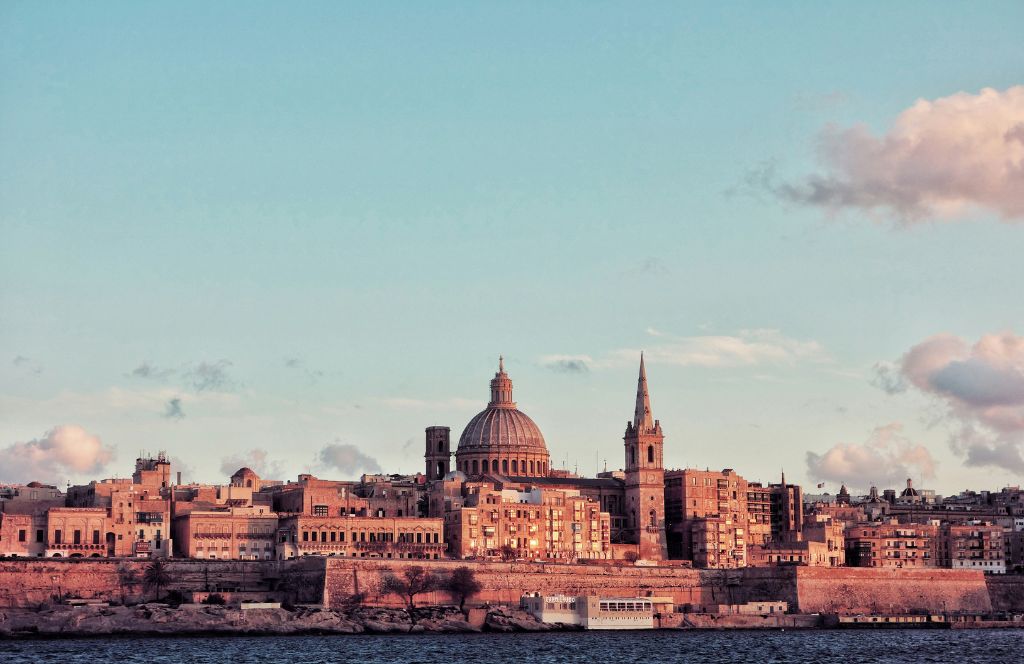
Malta packs 7,000 years of history into an island smaller than most US counties. Megalithic temples older than the pyramids, a medieval walled city with no cars, a capital built by crusader knights as a fortress against the Ottoman Empire, and some of the clearest water in the Mediterranean. All of this in a place you can drive across in 45 minutes.
Valletta: The capital, a UNESCO World Heritage Site, and one of the most concentrated historic centers in Europe. Built by the Knights of St. John after the Great Siege of 1565. Walk the Upper Barrakka Gardens for the best panorama of the Three Cities across the water.
Mdina: The old capital, known as "The Silent City" because cars are banned inside the walls. A medieval fortress town on a hilltop with narrow alleys, palaces, and total peace. Go in the late afternoon when the day-trippers have left.
The Blue Grotto: A series of sea caves on the south coast where the water is an unreal shade of blue. Boat trips run from the small harbor for around $10 and last about 25 minutes.
Marsaxlokk: A fishing village on the southeast coast, famous for its colorful traditional boats (luzzus) and its Sunday market. The seafood here is as fresh as it gets.
What to eat: Pastizzi (flaky pastry filled with ricotta, the national snack, about $1), rabbit stew (Stuffat tal-Fenek, the national dish), ftira (Maltese flatbread), and lampuki pie (dolphinfish pie). Wash it all down with a Cisk beer or a glass of Meridiana wine.
Where to eat:
- Noni: Michelin-starred in Valletta. Tasting menus from $90.
- The de Mondion: On the Mdina bastions; the view alone justifies the price.
- Tartarun: Seafood in Marsaxlokk. Honest cooking, reasonable prices.
Where to stay (bookable via Hotelgift):
- The Phoenicia Malta: Iconic 5-star just outside the Valletta gates. From $380/night.
- Iniala Harbour House: Ultra-luxury suites overlooking the Grand Harbor. From $500/night.
6. The Algarve, Portugal
Average temperature: 57°F to 77°F
Recommended stay: 5 days
2026 tourist tax: $2 (€2) per adult per night in Faro, Albufeira, and Vilamoura; $0 elsewhere
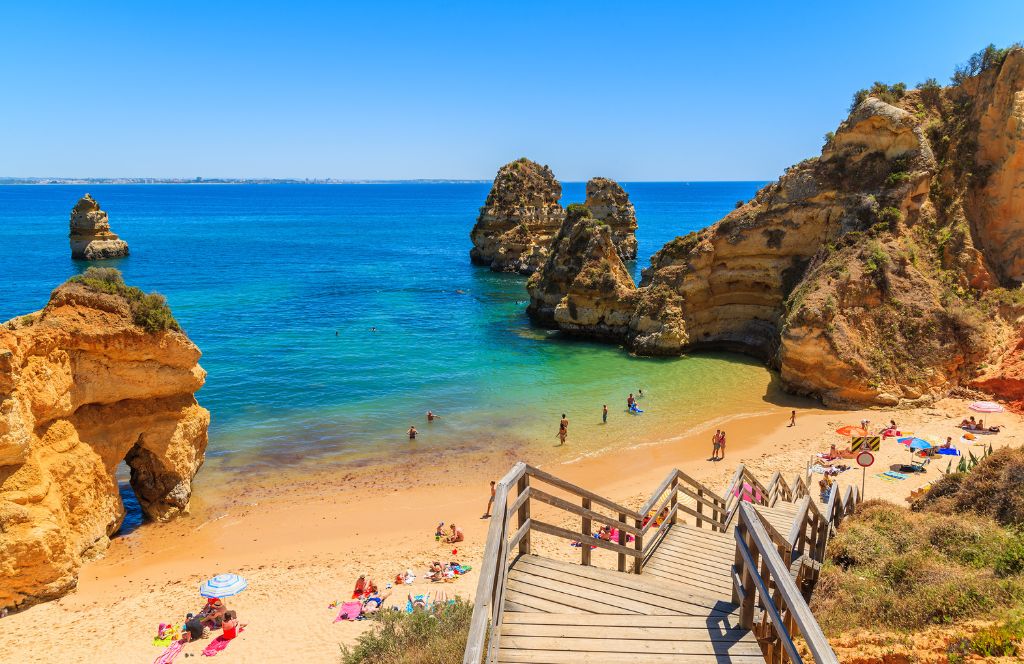
The Algarve has the most dramatic coastline in Western Europe, and we don't say that lightly. Golden limestone cliffs dropping into turquoise water, sea caves you can kayak into, and fishing villages where grilled sardines cost $9 to $15 a plate.
In May, the weather is already warm enough for sunbathing but the beach clubs and resorts haven't filled up, so you get the best of both worlds.
Lagos: A town with serious character. The old town is inside medieval walls, the marina is lively, and the cliff walks along Ponta da Piedade are some of the most photographed rock formations in Portugal. Book a kayak tour to explore the caves from the water.
Benagil Sea Cave: The famous Instagram shot, the round cave with a hole in the ceiling. Go before 9am or book a kayak tour to avoid the boat traffic.
Cape Saint Vincent: The southwestern tip of mainland Europe. A lighthouse, dramatic cliffs, and a genuine sense of being at the end of the world. The drive alone is worth it.
Faro: The capital of the Algarve, often skipped by tourists but actually a pleasant old town with a walled center, a bone chapel (Capela dos Ossos), and the Ria Formosa lagoon nature park.
What to eat: Grilled sardines, cataplana (seafood stew cooked in a copper pot), amêijoas à Bulhão Pato (clams in garlic and white wine), and pastéis de nata (custard tarts) with every coffee. Local Algarve DOC whites are surprisingly good.
Where to eat:
- Ocean Restaurant: Two Michelin stars with Atlantic views. Tasting menu around $180 per person.
- Vila Joya: Two Michelin stars in a boutique hotel setting.
- A-do-João: Grilled fish on the beach. Simple, fresh, under $20 a plate.
Where to stay (bookable via Hotelgift):
- Vila Vita Parc Resort & Spa: Widely considered the best luxury resort in Portugal. From $400/night.
- Tivoli Carvoeiro: Cliffside location, high-end feel. From $280/night.
- W Algarve: Modern, high-energy beach club vibe. From $350/night.
Best May destinations for culture
7. Seville, Spain

Average temperature: 59°F to 82°F
Recommended stay: 3 to 4 days
2026 tourist tax: None (Andalusia applies no regional tax)
Seville in May is when the city peaks before summer shuts it down. Jacaranda trees drop purple blossoms along every street, the orange trees still smell of neroli, and daytime highs sit around 80°F. By June the city starts tipping into 95°F territory, and by July and August nobody sane sightsees outdoors between noon and 6pm.
The Alcázar palace ($16 adult, free under 14) has gardens that doubled as Dorne in Game of Thrones. The cathedral is the largest Gothic cathedral in the world, and the Giralda tower (included in the $14 entry) gives you views over the whole city. Flamenco in Seville is the real thing; book a show at the Museo del Baile Flamenco or, for a rougher, more authentic version, go to La Carbonería in the evening.
What to eat: Tapas in Santa Cruz are good and cheap. A plate of patatas bravas is $4, and a full spread for two with drinks lands around $35. Don't miss solomillo al whisky, the local signature, at any decent taberna.
Seville also pairs well with a night in Córdoba (45 minutes by high-speed train) for the Mezquita, and Granada (2h 30min by bus) for the Alhambra. Book Alhambra tickets three months ahead, they sell out.
Where to eat:
- Eslava: Creative tapas in San Lorenzo. Their boneless ribs with caramel glaze won Seville's top tapas prize. Expect a wait.
- El Rinconcillo: Seville's oldest tavern (founded 1670). Classic chalk-on-the-bar bill-writing and straightforward Andalusian cooking.
- Cañabota: Michelin-starred seafood bar. Set menu around $110 per person.
Where to stay (bookable via Hotelgift):
- Las Casas de la Judería: A historic building in central Seville with architecture inspired by Andalusia's Arab and Jewish heritage. From $141/night.
- More Seville hotels: 100+ Hotelgift-bookable properties across the historic center and Triana. From $90/night.
8. Rome, Italy
Average temperature: 57°F to 75°F
Recommended stay: 3 to 4 days
2026 tourist tax: $4 to $11 (€4 to €10) per adult per night
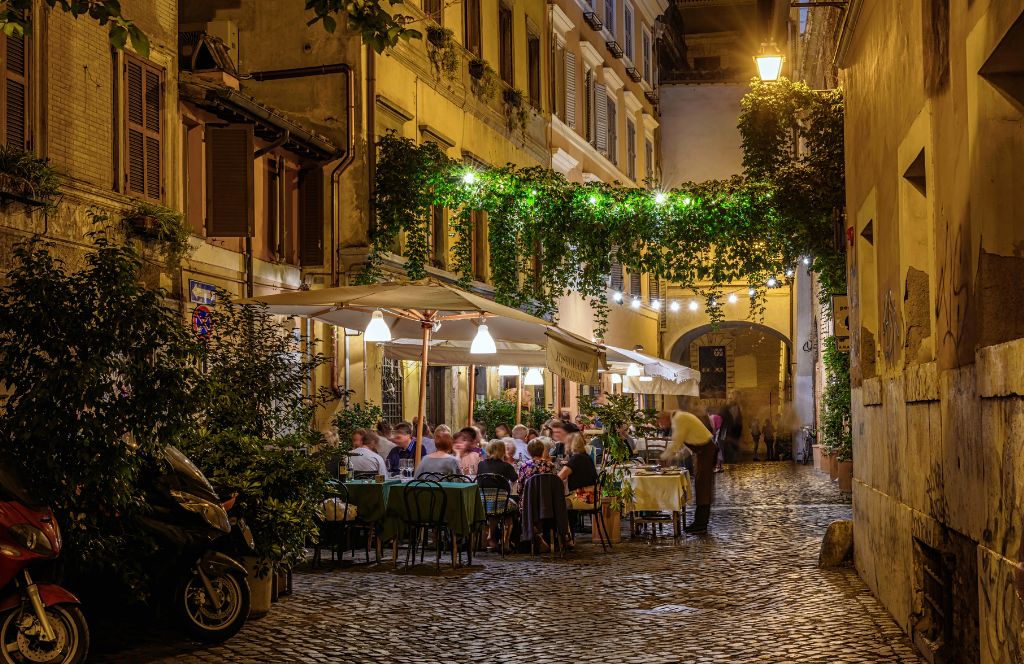
Rome in May is the best version of Rome. The heat isn't oppressive, the Colosseum queue isn't 2 hours long, and rooftop restaurants are open for dinner without needing a reservation made in April.
Hit the big three in sequence: the Vatican (book a 7:30am early entry tour for $80, before the general public gets in), the Colosseum and Forum (combined ticket $20, valid 24 hours, which lets you split them over two days), and the Pantheon (now ticketed at $6 but free on the first Sunday of the month). Leave the Trevi Fountain for after 10pm when the crowds thin and the lighting is at its best.
The real magic of Rome is in the neighborhoods: Trastevere for dinner and wine bars, Monti for vintage shopping and aperitivo, Testaccio for the food market and classical Roman cooking (cacio e pepe, amatriciana, carbonara, gricia: the four Roman pasta staples that every trattoria owes you).
What to eat: Roman pizza is thin, rectangular, and sold by weight. A serving of pizza bianca from Forno Campo de' Fiori is $4. Gelato from Fatamorgana or Giolitti is $4 a cup. Dinner at a solid trattoria runs $25 to $35 per person including wine.
Where to eat:
- Roscioli: The carbonara is textbook; the salumi counter is excellent. Reserve weeks ahead.
- Armando al Pantheon: Classic Roman cooking a few steps from the Pantheon. Book 2+ weeks ahead.
- Trapizzino (Testaccio): Pocket-pizza filled with traditional Roman stews. Under $10 for two.
Where to stay (bookable via Hotelgift):
- Hotels in Rome: 260+ Hotelgift-bookable properties from city-center boutiques near the Trevi Fountain to traditional hotels near the Vatican. From $130/night.
2026 note: Rome's tourist tax went up in 2024 and holds at the higher rate in 2026. Expect $4 to $11 per adult per night depending on hotel category, paid locally at checkout. Under-10s are exempt.
9. Tuscany, Italy
Average temperature: 59°F to 73°F
Recommended stay: 5 to 7 days
2026 tourist tax: $2 to $8 (€1.50 to €7) per adult per night
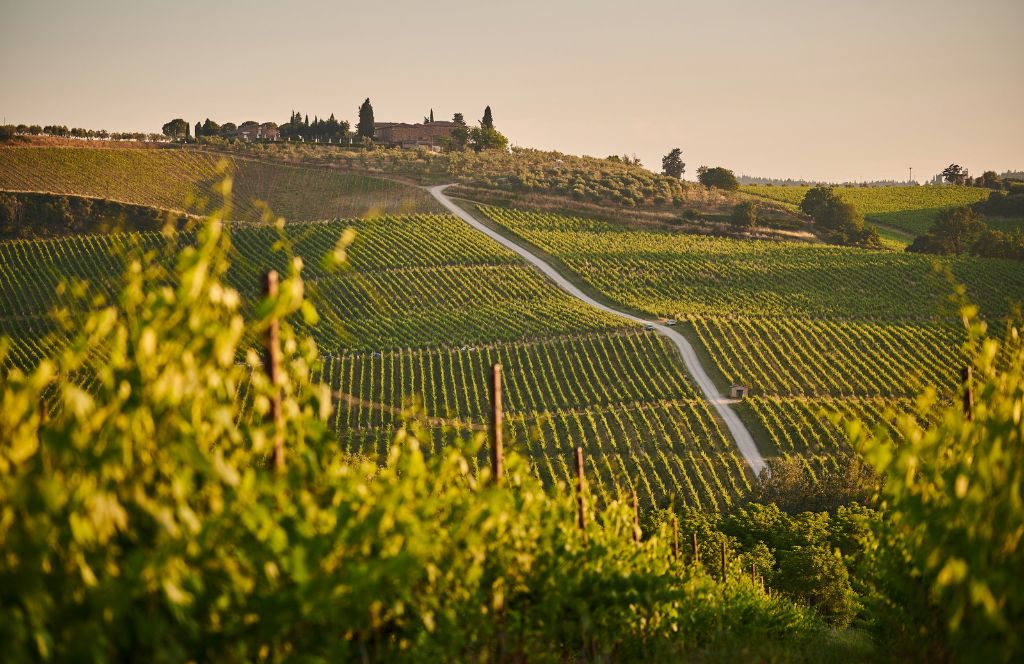
Tuscany requires time. If your idea of a holiday is 30,000 steps a day and 100 locations, this is not your place. The point of Tuscany is to slow down: long lunches, medieval villages, drives through vineyards and wheat fields, ending the day with a glass of Chianti and some good cheese.
If you try to do Florence, Siena, Pisa, and the hill towns in three days, you'll spend more time in your car than anywhere else. Give it a week minimum. May is when Tuscany is at its absolute best: green, copper, white, and red everywhere, in the fields, on the balconies, across the hills. May is also when Mostra del Chianti and Cantine Aperte open up wineries for tastings that are less formal (and cheaper) than the summer equivalents.
Florence: The capital of the Renaissance. The Uffizi takes a full morning (book tickets in advance, the queue is brutal), the Duomo is free to enter but the dome climb is $22, and the Ponte Vecchio is best visited early morning before the crowds. Don't miss the San Lorenzo Market for leather goods and street food.
Siena: Smaller and quieter than Florence but, in our opinion, even more charming. The Piazza del Campo (where they run the famous Palio horse race) is one of the most beautiful squares in Italy. Sit at a café, order an espresso, and just watch it for a while.
The hill towns: San Gimignano (the medieval Manhattan, famous for its towers), Montepulciano (Vino Nobile wine), and Montalcino (Brunello). Best done by car. Florence to Siena is 75 minutes; from there, the Val d'Orcia loop through Pienza and Montalcino is one of the most scenic drives in Europe.
What to eat: Bistecca alla Fiorentina (a massive T-bone steak, grilled rare and served with olive oil and salt), pappa al pomodoro, ribollita, and crostini toscani. Pair with a Chianti Classico or a Brunello.
Where to eat:
- Osteria di Passignano: Fine dining inside a Chianti vineyard. Reserve ahead.
- Trattoria Mario (Florence): Shared tables, no reservations, best Florentine steak in the city. Cash only.
- La Taverna di San Giuseppe (Siena): Rustic cooking in a cellar that dates to the 1100s.
Where to stay (bookable via Hotelgift):
- Four Seasons Hotel Firenze: Urban resort with a private botanical garden. From $1,200/night.
- Castello di Casole (Belmond): Converted castle in the Tuscan countryside. From $800/night.
10. Vienna, Austria

Average temperature: 50°F to 68°F
Recommended stay: 3 to 4 days
2026 tourist tax: 3.2% of net room rate
Warning: Avoid 10 to 17 May (Eurovision week). See Where to skip.
Vienna in May (outside Eurovision week) is one of the most civilized city breaks in Europe. Schönbrunn Palace and gardens are walkable without heat exhaustion, the coffeehouses (Central, Hawelka, Sperl) are at their best in shoulder season, and the Spanish Riding School's morning training sessions run through May before the summer break.
The Belvedere holds Klimt's "The Kiss" ($20 entry). The Kunsthistorisches is less crowded than the Louvre but holds comparable quality (Bruegel, Vermeer, Titian, $22 entry). The Naschmarkt on Saturdays is where locals shop, and the Prater (home of the Ferris wheel from "The Third Man") is pleasant in the long May evenings.
What to eat: Wiener schnitzel (at Figlmüller, the classic), tafelspitz (boiled beef with horseradish), and Sachertorte with coffee at the Sacher or Demel. A proper coffeehouse lunch with cake runs $25 to $35.
Where to eat:
- Figlmüller: The schnitzel bigger than your plate. Two central locations; both queue.
- Steirereck: Two Michelin stars, modern Austrian, set in Stadtpark. Tasting menus from $190.
- Café Central: The classic coffeehouse, once frequented by Freud and Trotsky. Go for the Melange and a Sachertorte.
Where to stay (bookable via Hotelgift):
- Hotels in Vienna: 150+ Hotelgift-bookable properties from grand dame hotels near the Staatsoper to boutique stays in the Museum Quarter. From $130/night in non-Eurovision weeks.
2026 timing tip: The two weeks either side of Eurovision (3 to 9 May, and 18 to 24 May) are Vienna at normal prices but still with the festival buzz in the air. Book either of those windows if Eurovision matters to you visually but not as a ticketed event.
11. Budapest, Hungary

Average temperature: 54°F to 72°F
Recommended stay: 3 days
2026 tourist tax: 4% of net room rate in Budapest city
Budapest in May is the best-value capital in Europe for US travelers. Dinner at a strong mid-range restaurant is $30 per person. A thermal bath day at Széchenyi (the giant neo-Baroque outdoor one you've seen in every travel article) is $25. A river cruise at sunset is $20. Nothing on this list costs what it would in Paris or Rome.
The city is essentially two cities: Buda on the hilly west bank (Castle Hill, Fisherman's Bastion, Matthias Church, all walkable together in an afternoon) and Pest on the flat east bank (Parliament, St Stephen's Basilica, Jewish Quarter, and the ruin bars). The Chain Bridge connects them; walk it at sunset.
The ruin bar scene (Szimpla Kert is the original, $5 beers, $8 cocktails) is genuinely unique to Budapest. The Great Market Hall (Nagyvásárcsarnok) is where locals buy paprika, salami, and tokaji dessert wine to take home.
What to eat: Goulash (the real thing is a soup, not a stew), chicken paprikash, lángos (deep-fried dough with sour cream and cheese, the Hungarian pizza), and chimney cake from the bakery at Váci utca. Hungarian wines (Egri Bikavér reds, Tokaji whites) are excellent and $5 a glass.
Where to eat:
- Borkonyha Winekitchen: Michelin-starred modern Hungarian. Tasting menus from $90.
- Stand25 Bisztró: Chef Tamás Széll's bistro in the Great Market Hall. Textbook goulash and paprikash. Under $30 per person.
- Mazel Tov: Lively restaurant-bar in the Jewish Quarter. Middle Eastern-Hungarian crossover, live music most nights.
Where to stay (bookable via Hotelgift):
- Hotels in Budapest: 120+ Hotelgift-bookable properties on both Buda and Pest sides of the Danube, including grand belle-époque hotels and modern design-forward stays. From $80/night.
Best May destinations for mild coastal weather
12. Split, Croatia
Average temperature: 61°F to 75°F
Recommended stay: 3 to 4 days
2026 tourist tax: $1 to $3 (€1 to €3) per adult per night
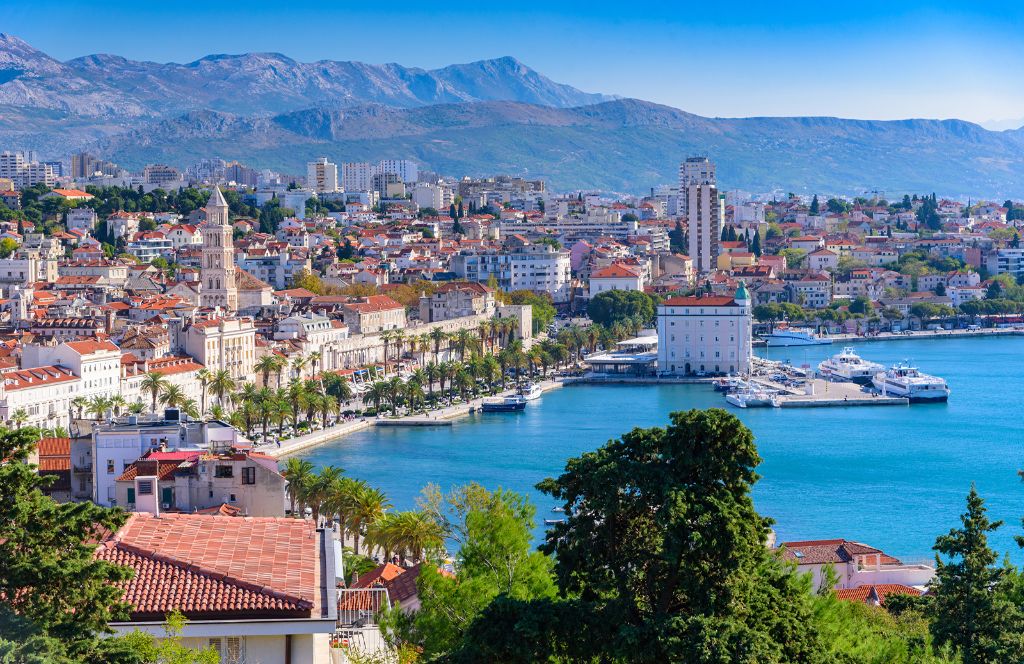
Split has something most European beach destinations don't: a Roman emperor's palace in the middle of town. And we're not talking about ruins behind a fence. Diocletian's Palace is the living city center, with apartments, restaurants, and bars literally built into and around the original 4th-century walls. People live inside a Roman palace. That's Split.
In May the Adriatic is still a bit cool for swimming (around 66°F), but that's not why you come this early. The Riva Promenade, Marjan Hill, and the old town are at their best before the summer heat and the cruise ship crowds take over.
Diocletian's Palace: Walk through the underground cellars, visit the Peristyle (central courtyard), and climb the bell tower of the Cathedral of Saint Domnius for views over the red rooftops. UNESCO World Heritage Site.
Marjan Hill: The green peninsula west of the old town, perfect for a morning hike. Trails through pine forest, viewpoints over the islands, and small beaches at the base that are much quieter than the city ones.
The Riva: The seafront promenade where the entire city gathers in the evening. Grab a coffee or a beer and sit facing the harbor.
What to eat: Dalmatian cuisine is sea-focused and simple. Grilled fish (especially sea bass and sea bream), crni rižot (black risotto with cuttlefish ink), and pašticada (slow-cooked beef stew with gnocchi). Pair with a glass of Plavac Mali, the local red. A full meal runs $35 to $50 per person, half of what you'd pay in Italy or France.
Where to eat:
- Bokeria Kitchen & Wine: Mediterranean small plates in a buzzy, modern setting.
- Konoba Hvaranin: Traditional Dalmatian seafood, tucked away from the tourist strips.
- Dvor: Seaside terrace southeast of the old town. Go for sunset.
Where to stay (bookable via Hotelgift):
- Cornaro Hotel: Central location with a rooftop bar. From $220/night.
- Heritage Hotel Antique Split: Literally inside the palace walls. From $280/night.
13. Sardinia, Italy
Average temperature: 54°F to 72°F
Recommended stay: 7 days
2026 tourist tax: $1 to $4 (€1 to €3.50) per adult per night
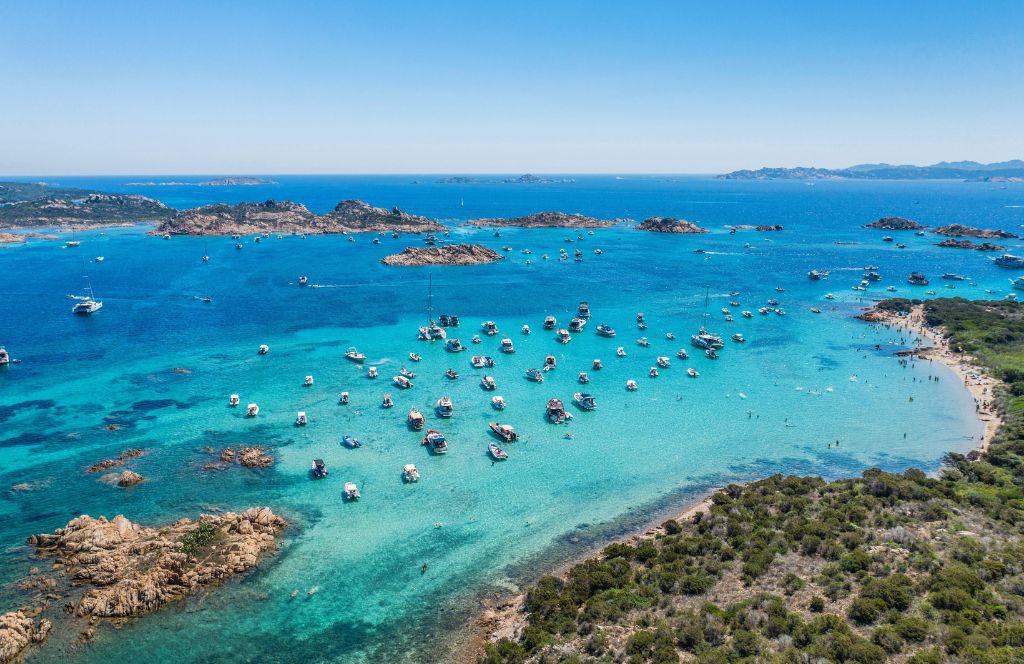
Sardinia is an island of contrasts. On one side you have the Costa Smeralda in the northeast: yachts, designer boutiques, and cocktails at $22 a pop. On the other, the mountain interior around Orgosolo and Barbagia, where shepherds still make pecorino by hand, murals cover every building, and roast suckling pig (porceddu) is cooked over open flames on a spit.
May is when you should come. The beaches aren't yet claimed by sun loungers, the water is starting to warm up, and the local food is at its absolute best: bottarga (cured fish roe, the "Sardinian caviar"), handmade pasta like malloreddus and culurgiones, pecorino from sheep grazing on spring grass, and wines from vineyards that go back to Roman times.
Costa Smeralda: The luxury coastline in the northeast. Even if the celebrity scene isn't your thing, the beaches here (Spiaggia del Principe, Liscia Ruja) are some of the most beautiful in Europe. Still quiet in May.
Cagliari: The capital, in the south. A real working city with a medieval hilltop quarter (Castello), flamingos in the salt flats, lively markets, and excellent restaurants. Often skipped by tourists but one of the most underrated cities in Italy.
Alghero: On the northwest coast, a town with heavy Catalan influence (they still speak a Catalan dialect). Cobbled streets, coral jewelry shops, seafood restaurants, and the Neptune's Grotto caves nearby.
The interior (Barbagia and Orgosolo): Mountain villages, political murals, traditional festivals, and food that comes straight from the land. Su Gologone, one of the best restaurants on the island, is here.
What to eat: Porceddu (roast suckling pig), malloreddus alla Campidanese (Sardinian gnocchi with sausage ragu and saffron), culurgiones (handmade stuffed pasta with potato, mint, and pecorino), bottarga, and seadas (fried pastry with fresh cheese and honey). Wine: Cannonau (a robust red) and Vermentino (a crisp white).
Where to eat:
- Su Gologone: The porceddu here is legendary. Mountain setting.
- Dal Corsaro (Cagliari): Michelin-starred modern Sardinian cooking.
- Al Refettorio (Alghero): Seafood in a courtyard.
Where to stay (bookable via Hotelgift):
- Forte Village Resort - Le Dune: Top-tier luxury on the south coast. From $500/night.
- Falkensteiner Resort Capo Boi: Good for families. From $250/night.
- Palazzo Doglio: Refined city hotel in Cagliari. From $200/night.
14. Nice, France (first week of May only)
Average temperature: 55°F to 67°F
Recommended stay: 3 to 4 days
2026 tourist tax: $2 to $6 (€2 to €5) per adult per night
Warning: Book for 1 to 11 May only. Hotel prices jump 40 to 60% from 12 May (Cannes Film Festival start). See Where to skip.
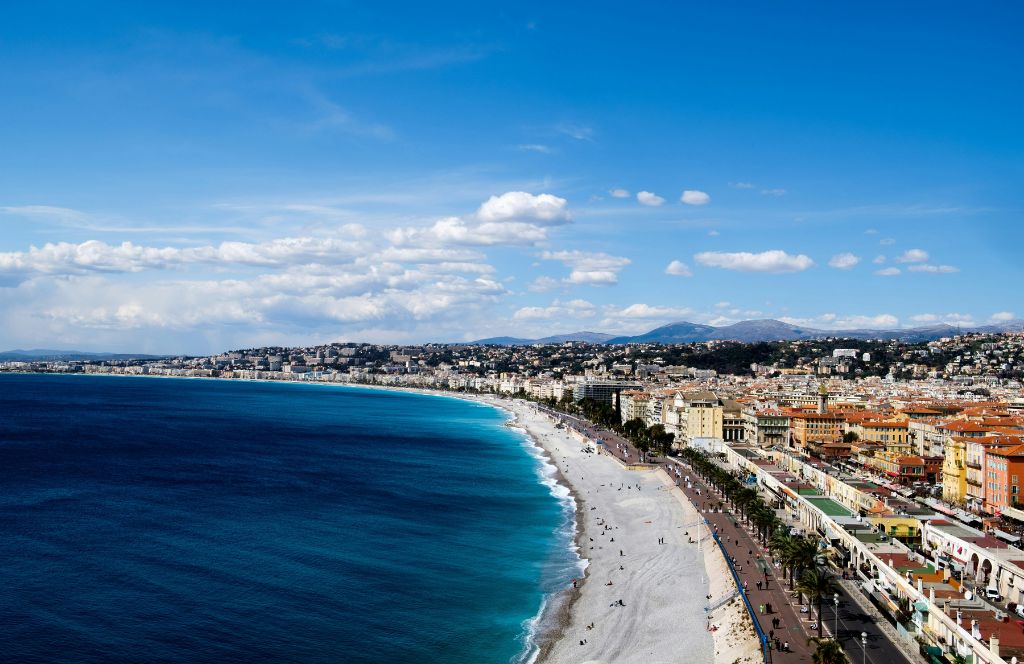
Nice in early May catches the French Riviera as it wakes up for the season. Beach clubs opening, the Promenade des Anglais walkable without dodging crowds, and a noticeable buzz on the coast. Hit it the first 11 days of May and you get the glamour without the 60% price premium that the rest of the month brings.
Vieux Nice (Old Town): The best street food on the Riviera. Narrow streets in ochre and terracotta, the Cours Saleya flower and olive market, and socca (a chickpea pancake) at Chez Pipo for about $6.
Castle Hill (Colline du Château): Panoramic viewpoint over the coastline, the old port, and the Baie des Anges. Go for sunset.
The Chagall Museum: One of the most underrated art collections in France. Purpose-built galleries with gardens, far less crowded than anything in Paris.
Promenade des Anglais: The famous seafront walk. Cyclable and walkable in early May without the summer gridlock.
What to eat: Socca (the signature), salade niçoise (the real one, with tuna, anchovies, olives, and eggs, never lettuce), pissaladière (caramelized onion tart with anchovies), and ratatouille (the original version, from this region). For something sweet, tourte de blettes (a sweet chard pie, sounds strange, is delicious).
Where to eat:
- Le Chantecler: Two Michelin stars inside the Negresco Hotel.
- Chez Pipo: The socca institution. Cash only, no reservations. Go and queue.
- Peixes: Trendy spot for ceviche and seafood near the port.
Where to stay (bookable via Hotelgift):
- Hotel Negresco: One of the most famous hotels on the Riviera. From $650/night early May, $1,100+ during Cannes.
- Hotel Villa Rose: 5 minutes from the Promenade, good value for Nice. From $130/night.
Best May destinations for cool-weather travel
15. Amsterdam, The Netherlands
Average temperature: 50°F to 63°F
Recommended stay: 3 to 4 days
2026 tourist tax: 12.5% of room rate (Amsterdam's tourist tax is among the highest in Europe)
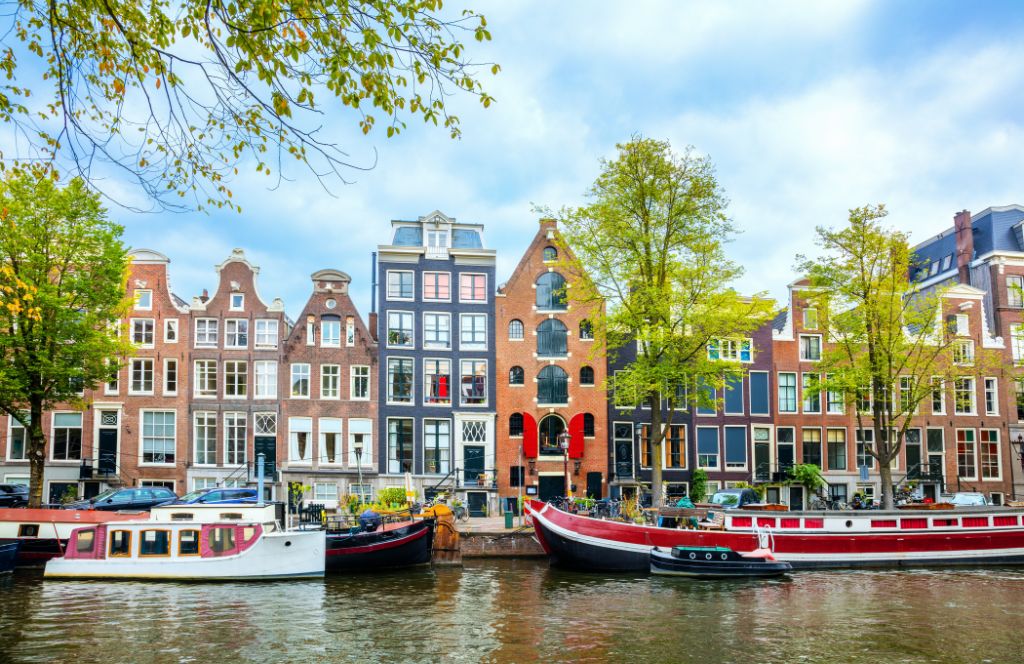
Amsterdam in May is tulips, 16-hour days, canal terraces open for the season, and the city noticeably less crowded than summer. By May the cold and rain are mostly gone. If you walk through the center you'll find street performers, concerts, free tours, and every terrace open.
Rent a bike to cover the city faster. Plenty of shops rent them for a fixed day rate.
Neighborhoods to explore:
Museumplein: Where all the museums cluster. The Van Gogh, Rijksmuseum, MoCo (which has a permanent Banksy exhibition), Modern Art Museum, and the Concertgebouw concert hall. All around a large open square, good for a mid-afternoon snack on the grass.
De Pijp: Where restaurants, bars, and cafés concentrate. Best neighborhood for dinner variety. Right behind the Heineken Experience (the original factory).
Jordaan: The soul of Amsterdam's architecture and canals. Perfect for walking, art galleries, the Anne Frank House, and the smaller churches.
Red Light District: Beyond the clichés, the architecture is genuinely striking. Evening visits only; the area quiets down during the day.
Day trip: The Keukenhof tulip gardens (open until mid-May) are worth the 40-minute bus ride; arrive before 10am to avoid the tour groups.
Book the Anne Frank House six weeks ahead, minimum. Tickets sell out.
Where to eat:
- Restaurant De Kas: Farm-to-table inside a 1926 greenhouse. Mains from $40.
- Moeders: Traditional Dutch comfort food; the walls are covered in photos of customers' mothers.
- RIJKS: Fine dining inside the Rijksmuseum.
Where to stay (bookable via Hotelgift):
- Pulitzer Amsterdam: Five-star spread across 25 restored canal houses. From $550/night.
- Tribe Amsterdam City: Modern design hotel in Amsterdam-Noord, strong value. From $160/night.
16. The Scottish Highlands
Average temperature: 50°F to 63°F
Recommended stay: 6 to 8 days
2026 tourist tax: None currently (Edinburgh introducing a visitor levy in July 2026, but not the Highlands)
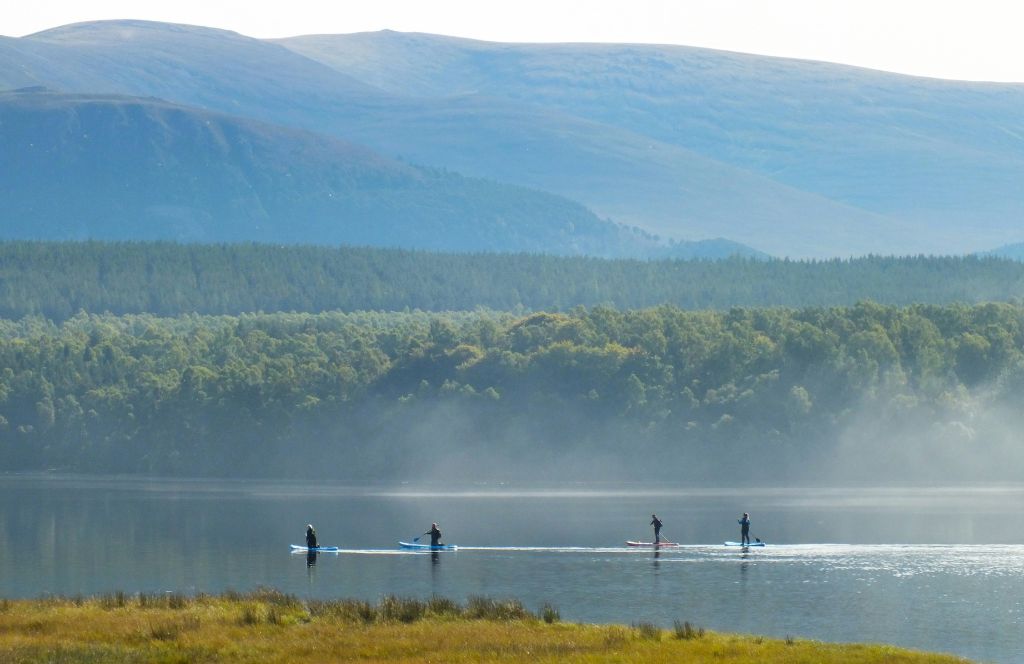
The Scottish Highlands in May are a completely different world from anything else on this list. Up to 17 hours of daylight, landscapes that feel prehistoric, empty single-track roads, lochs that haven't been disturbed in centuries, and a silence you don't experience anywhere else in Western Europe.
May is the sweet spot because the midges (tiny biting insects that are the only real downside of Scotland) haven't arrived in force yet. By June and July they can be genuinely miserable in certain areas. In May you get the green, the light, and the space without the bugs.
Isle of Skye: The main draw, for good reason. The Old Man of Storr, the Fairy Pools (crystal-clear pools at the base of the Cuillin Mountains), and the Quiraing (a landslip that looks like another planet) are all here. Give Skye at least 2 full days, the single-track roads slow everything down.
Eilean Donan Castle: The most photographed castle in Scotland, sitting on a small island where three lochs meet. The image of Scotland that you have in your head, even better in person.
Loch Ness: Beyond the monster legend, the loch is beautiful and the surrounding area (Urquhart Castle, Fort Augustus) makes a good day out. Both Eilean Donan and Loch Ness are doable as day trips from Inverness.
The North Coast 500: If you have the time, one of the greatest road trips in Europe. A 500-mile loop around the northern coast with beaches that look Caribbean (except the water is 54°F), dramatic sea cliffs, and barely any traffic.
A rental car is essential. There's no practical way to do the Highlands by public transport.
What to eat: Seafood in the Highlands is world-class. Langoustines pulled from the loch that morning, hand-dived scallops, smoked salmon, fresh oysters. Try haggis (sounds scary, is essentially a savory spiced meat pudding), cullen skink (a thick smoked haddock chowder), and a dram of single malt whisky at any local pub.
Where to eat:
- The Kishorn Seafood Bar: Fresh-off-the-boat scallops and langoustines. Worth a detour.
- The Three Chimneys (Skye): Destination dining in a remote croft house. Book well ahead.
- Rocpool (Inverness): Modern dining in the Highland capital; good steaks and seafood.
Where to stay (bookable via Hotelgift):
- Wyndham Duchally Country Estate: Rural setting near the Ochil Hills, 5 minutes from Gleneagles. From $190/night.
- Murraypark Hotel: Country house hotel in the heart of the Highlands. From $150/night.
Where to skip in May 2026 (and when)
Three places worth naming for what they are in May 2026: expensive, crowded, or logistically painful for one specific reason.
Vienna during Eurovision week (10 to 17 May)
Hotel prices 3 to 4x normal, the city center effectively converted into a music festival, and public transport stretched thin. Vienna is a great destination in May (see our write-up), just not this week unless you have Eurovision tickets. Target the first 9 days of May or the 18 to 31 May window.
The French Riviera during Cannes (12 to 23 May)
Cannes, Nice, Antibes, and Monaco see hotel rates jump 40 to 60%, with a further spike the weekend of the Monaco Grand Prix (typically the weekend after Cannes ends). Restaurants without reservations are unavailable. Even the beach clubs have waitlists. For the Riviera, target 1 to 11 May.
Venice on day-tripper fee dates (15 days in May)
Venice charges a day-tripper access fee on 1, 2, 3, 8, 9, 10, 15, 16, 17, 22, 23, 24, 29, 30, and 31 May 2026, active 8:30am to 4pm. Day visitors pay $5 (€5) booked 4+ days ahead, or $10 (€10) last-minute. The fee itself isn't the problem, the crowds are: Venice on fee-active weekends sees 25,000+ day visitors on top of overnight guests and residents. If you want to visit Venice in May, book an overnight stay inside the municipality (overnight guests are exempt from the fee, though still must register), and aim for a Monday-to-Thursday window (most fee dates fall on Fridays, Saturdays, and Sundays).
2026 hotel price comparison
Indicative 2026 pricing, per night, standard double room:
| Destination | Budget (3-star) | Mid-range (4-star) | Luxury (5-star) |
| Valencia | $95–135 | $160–240 | $350–500 |
| Athens | $85–125 | $160–280 | $450–800 |
| Greek Islands (Crete, Santorini) | $120–180 | $220–400 | $500–1,400 |
| Cyprus | $90–130 | $180–290 | $400–700 |
| Malta | $100–140 | $180–270 | $400–650 |
| Algarve | $90–130 | $180–320 | $450–800 |
| Seville | $95–135 | $170–280 | $400–650 |
| Rome | $140–200 | $260–420 | $700–1,300 |
| Tuscany | $120–170 | $220–400 | $650–1,300+ |
| Vienna (non-Eurovision weeks) | $130–180 | $220–370 | $500–900 |
| Budapest | $80–120 | $150–240 | $350–600 |
| Split | $110–150 | $190–290 | $380–600 |
| Sardinia | $110–160 | $200–380 | $550–1,500+ |
| Nice (first 11 days of May) | $130–190 | $250–430 | $700–1,200 |
| Amsterdam | $140–200 | $240–380 | $600–1,000+ |
| Scottish Highlands | $130–180 | $200–340 | $450–900 |
How EES and ETIAS affect May travel from the US
May 2026 is the first full "regime" month of the EU's Entry/Exit System. Here's what that means practically for US travelers.
First entry is slower. Every member of your party (including kids) gets fingerprinted and photographed at passport control on their first entry into any Schengen country. The process takes 2 to 3 minutes per person, versus 20 seconds for a manual stamp. Multiply by a family of four and you add 8 to 12 minutes per family, not counting the queue in front of you.
Plan for 60 to 90 minutes extra at arrivals. Madrid-Barajas, Barcelona-El Prat, Rome-Fiumicino, Paris-CDG, Amsterdam Schiphol, and Frankfurt have all reported 2-hour queues during peak spring 2026 weeks. Build that buffer into tight connection plans, especially for second-leg flights within the EU.
Return trips are faster. Once your biometrics are in the EES system, subsequent entries within 3 years use automated gates where available. The pain is a one-time cost.
ETIAS isn't live yet. The EU's travel authorization system (similar to the US ESTA) does not launch until the last quarter of 2026. For May, you don't need to apply for anything in advance. Bring your passport and expect biometric capture at the border.
UK is separate. If your itinerary includes London, Edinburgh, or anywhere in the UK, note that the UK has its own ETA system (already live, $17, applied for online, valid 2 years).
What to pack for Europe in May
May weather across Europe varies enough that a single packing list doesn't work. A few broad principles:
Layers, always. The morning in Rome can be 55°F, the afternoon 80°F. A thin jacket you can stuff into a daypack saves you from either being cold at breakfast or soaked in sweat by lunch.
Real walking shoes. Europe is a walking continent. Cobbles, hills, uneven pavement. Heels or dress sandals break ankles. Bring sneakers or low-profile trail shoes for day use.
A lightweight rain shell. Even in the sunniest destinations (Valencia, Athens, Malta), one afternoon of rain per week is normal in May.
Swimwear for southern destinations. Mediterranean sea temperatures reach 66 to 68°F by late May, cold but swimmable for most adults. For Greek islands, Cyprus, the Algarve, and southern Sardinia, bring it.
Warmer mid-layer for northern destinations. Scotland and Amsterdam can drop to 45°F at night. A fleece or a thin wool sweater covers this without eating up luggage space.
Adapter plug. Europe uses Type C and Type F plugs at 230V. US electronics (phones, laptops) work fine; anything with a heating element (hair dryer, curling iron) needs a voltage converter, or just leave it and use the hotel's.
FAQ: Traveling to Europe in May
Is May a good time to visit Europe?
May is one of the best months. Weather ranges from mild (55°F to 65°F in Northern Europe) to warm (72°F to 82°F in Southern Europe), prices are noticeably lower than June through August, and most destinations have fewer tourists. The trade-off: Mediterranean sea temperatures are still cool (66°F to 68°F), so serious beach swimming is better from mid-June.
Is May too early for the Mediterranean?
For Cyprus, Greece, Malta, and southern Spain, no. Expect daytime highs of 72°F to 80°F. For the French Riviera, Croatia, and most of Italy, May is comfortable but the sea is still cool for swimming. Mid-May onward is your best bet for sea temperature.
Where is warmest in Europe in May?
Cyprus, southern Spain (Seville, Málaga), Malta, Athens, and the Greek islands. Expect daytime highs between 72°F and 82°F. Cyprus and Seville are the warmest destinations on this list.
Where is Eurovision 2026?
Vienna, Austria. The Grand Final is Saturday 16 May at the Wiener Stadthalle, with semifinals on 12 and 14 May and the Turquoise Carpet opening on 10 May. Hotel rates in Vienna triple or quadruple that week. Book before December 2025 or travel a different week.
Is Europe expensive in May?
May is shoulder season: cheaper than June through August, slightly more expensive than March and April. For weather-to-price ratio, May is the best value month of the year in most of Europe. Specific weeks (Eurovision in Vienna, Cannes on the Riviera) are exceptions.
Do I need ETIAS for Europe in May 2026?
No. ETIAS (the EU's travel authorization system) launches in the last quarter of 2026. For May travel you don't need to apply for anything in advance, but you will be fingerprinted and photographed at border control under the EES system (no fee, no pre-registration required).
Which Venice dates charge the day-tripper fee in May 2026?
Day-tripper fees apply on 1, 2, 3, 8, 9, 10, 15, 16, 17, 22, 23, 24, 29, 30, and 31 May 2026, from 8:30am to 4pm. Fee is $5 (€5) if booked 4+ days ahead, $10 (€10) last-minute. Overnight guests in Venice are exempt from the fee but still must register online. Children under 14 are exempt.
What is the cheapest month to fly to Europe from the US?
January and February have the lowest fares overall. For May departures, booking in February usually gives the best prices. Midweek departures (Tuesday through Thursday) are consistently cheaper than weekends.
Is $100 a day enough for Europe?
In Budapest, Cyprus, the Algarve, and the Greek islands outside Santorini, yes. In Amsterdam, Rome, Nice, or Tuscany, you'll need closer to $150 to $200 per day for accommodation, food, and activities. The hotel price table above gives a realistic range.
Do I need a car?
For Tuscany, the Scottish Highlands, the Algarve, Sardinia, and Crete, a rental car significantly improves the experience. Amsterdam, Valencia, Athens, Rome, Split, Malta, Nice, Budapest, and Vienna are all walkable or well-served by public transport.
Plan your May 2026 trip with Flightgift
Not sure which destination to pick? A Flightgift card gives you access to 400+ airlines and 980 destinations worldwide, so you can decide later. Pair it with a Hotelgift card for accommodation too. Both are valid for 2 years.
Last reviewed: April 2026. We update this article annually before the spring travel planning season, verifying weather, major events, transport options, and average costs.