



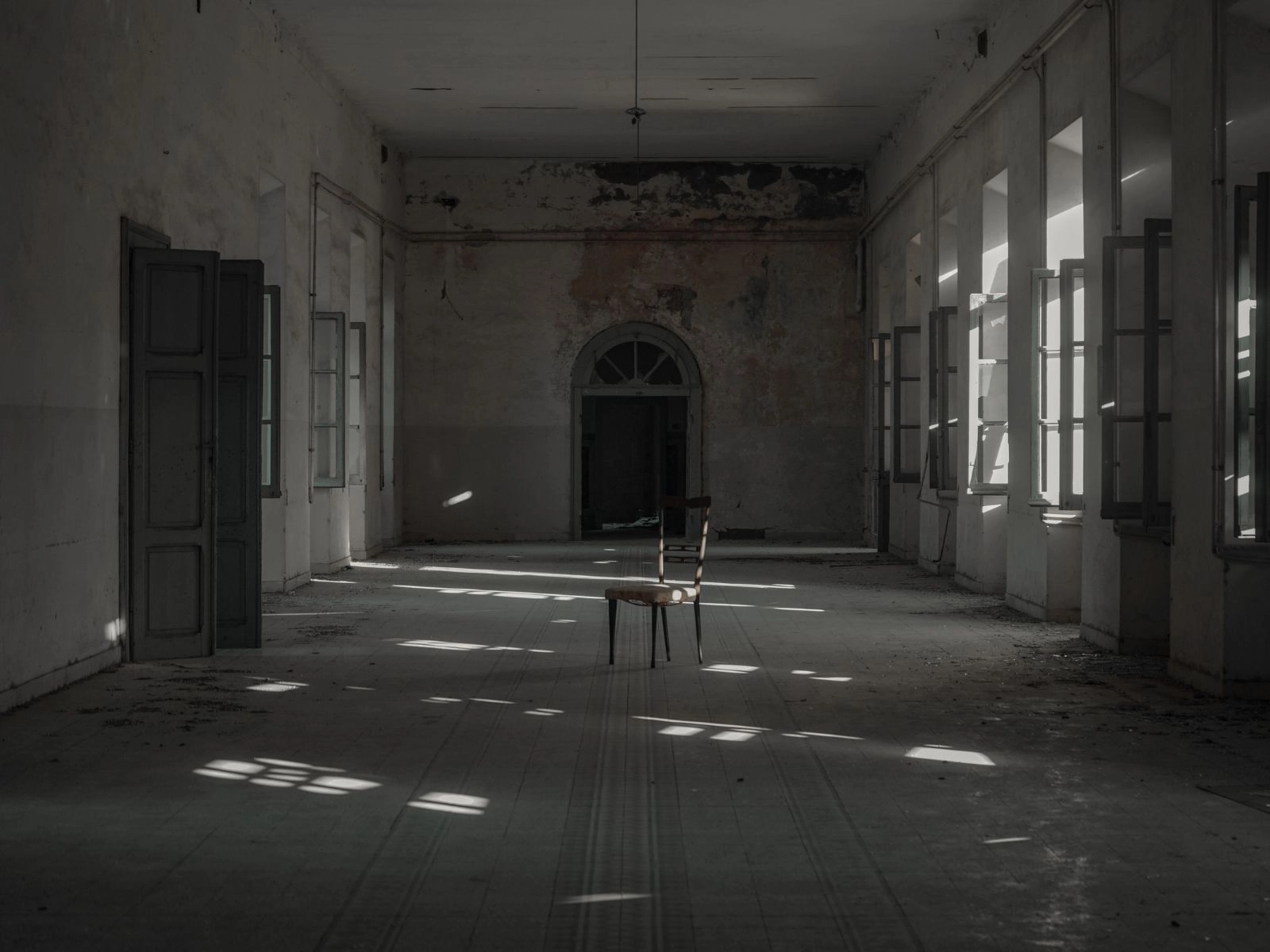
As fall draws in, darkness falls earlier and earlier — and Germany's ghosts come out with it. Whether you're building a Halloween trip around it or you just like your travel with a cold shiver down the spine, these are the places worth the detour.
The most haunted places in Germany include the Beelitz Sanatorium in Brandenburg, the Rakotz Bridge in Saxony and Haus Fühlingen in Cologne — ten sites in all, listed below with their history, address and what it costs to get in.
Plenty of German attractions bring out the big guns for Halloween, like at the Hamburg Dungeon - worth pairing with three days in Hamburg if you're already heading north.
The 10 Most Haunted Places in Germany
- Beelitz Sanatorium, Brandenburg
- Rakotz Bridge, Gablenz, Saxony
- Haus Fühlingen, Cologne, North Rhine-Westphalia
- The Plague Chapel, Weilheim, Bavaria
- Peacock Island, Berlin
- The Forbidden City of Wünsdorf, Brandenburg
- Bunker Valentin, Bremen
- Hotel Waldlust, Freudenstadt, Baden-Württemberg
- The Ghost Forest, Nienhagen, Mecklenburg-Vorpommern
- Waldniel-Hostert Nursing Home, Schwalmtal, North Rhine-Westphalia
1. Beelitz Sanatorium, Brandenburg
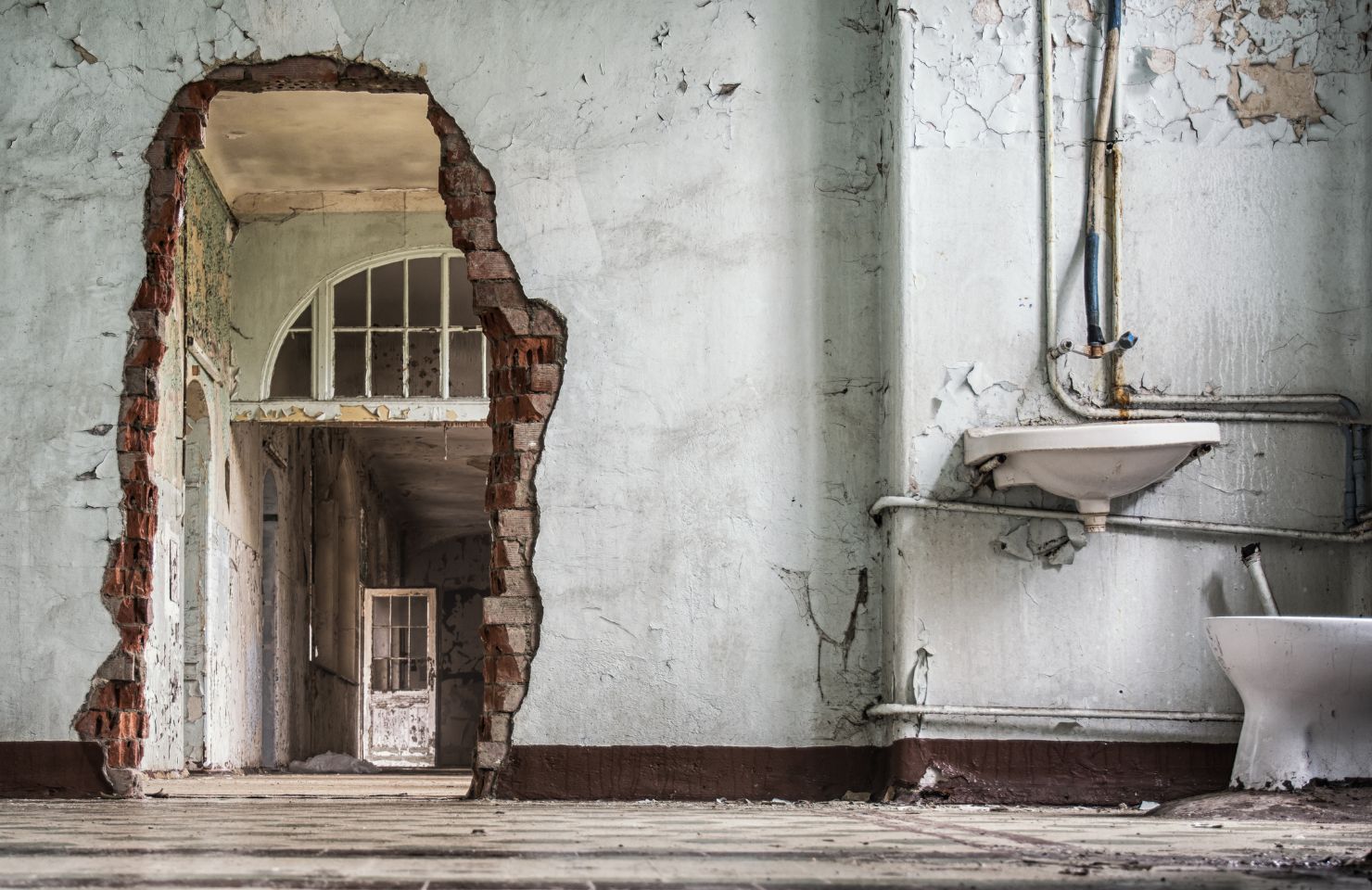
If Germany has one internationally famous haunted place, it's this one.
The Beelitz Sanatorium was the largest hospital in Europe of its day when it opened in 1902, built to treat the tuberculosis patients pouring out of a fast-industrializing Berlin. It served as a military hospital in both world wars - a young Adolf Hitler was treated here in 1916 - and Soviet troops held the site until 1994. Then it was simply left to rot, and the ghost stories moved in behind them.
There is no reliable death toll from its years as a hospital, but the modern crimes are documented. In 1991 a young woman and her three-month-old son were murdered on the grounds by the serial killer known as the Beast of Beelitz. In 2008 a model was beaten and strangled here by her own photographer. Today you can walk the ruins on a guided tour, or take the treetop walkway that runs above the crumbling wards - the best view in Germany of a hospital the forest is slowly eating.
Know Before You Go
- Why it's haunted: Considered haunted since the 1990s, after a run of tragedies and the first reported sightings.
- Can you visit? Yes - guided tours of Beelitz-Heilstätten run regularly, and the treetop walkway is open to the public.
- Admission: €17.00 for adults (18+), €12.00 for children and teens aged 7–17. Under-7s go free with an adult.
- Address: Straße nach Fichtenwalde 13, 14547 Beelitz-Heilstätten
Potsdam makes the easiest base - the Hotel am Havelufer Potsdam looks out over Lake Templin and is about 30 minutes from the site by car.
2. Rakotz Bridge, Gablenz, Saxony
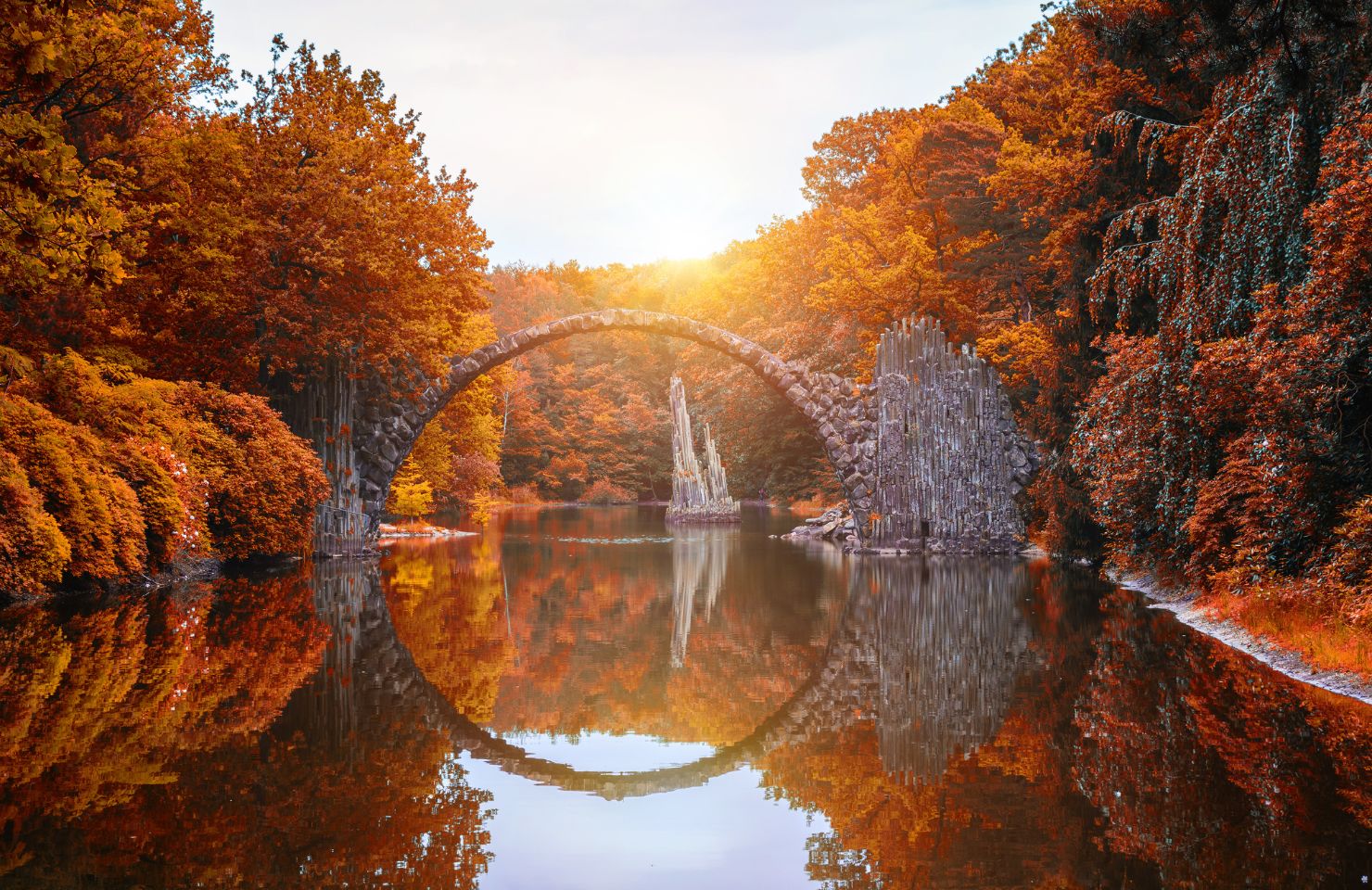
You've seen this one on your feed and assumed it was just a pretty spot for photos.
The Rakotz Bridge (the Devil's Bridge) was built in the 1860s by Friedrich Hermann Rötschke on the Rakotz lake in Kromlau Park, and its arch is cut so precisely that its reflection in the still water completes a perfect circle. That is exactly the problem, as far as the local legend goes.
Nobody, the story runs, could build a thing like that unaided. The devil is said to have supplied the missing craftsmanship, and to have asked in return for the soul of the first living creature to cross. It was a poor bargain for the bridge builder: he went first, and he died. The bridge has been closed to foot traffic for years to protect the stonework, but the park around it is open and free, and at dusk in the fall it earns every bit of its reputation.
Know Before You Go
- Why it's haunted: Centuries of devil legends and a reputation as a place where strange energies gather.
- Can you visit? No official tours, but Kromlau Park is open year-round and free to enter.
- Address: Halbendorfer Straße, 02953 Gablenz
3. Haus Fühlingen, Cologne, North Rhine-Westphalia
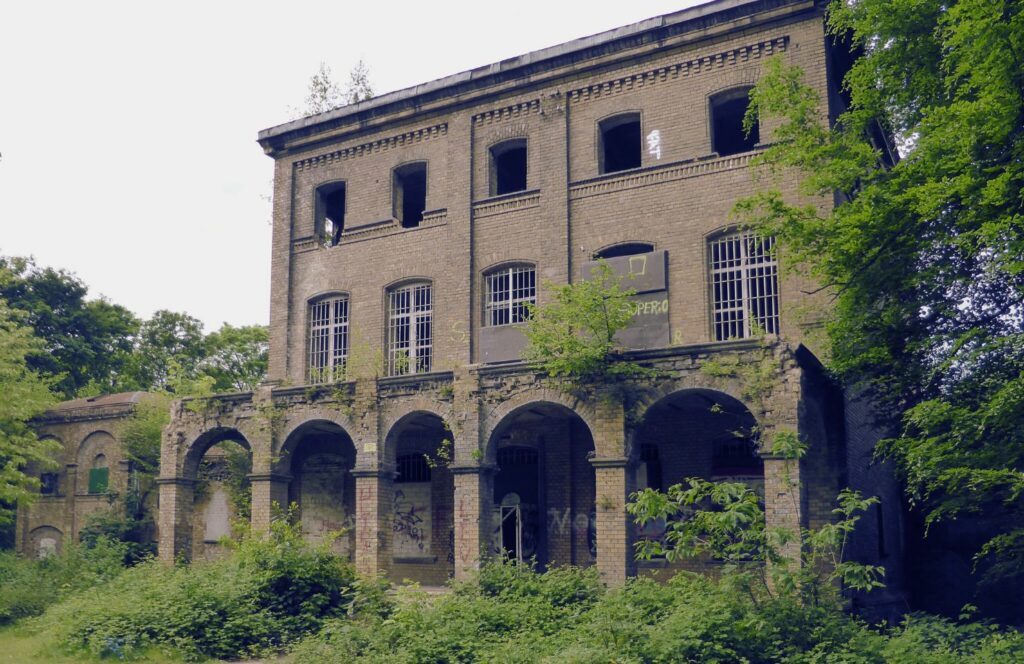
Ask anyone who grew up in Cologne and they'll have a Haus Fühlingen story.
Thousands of knights are said to have died on this ground in a battle in 1288 - some in the fighting, most trampled by horses until they couldn't be identified. Centuries later Eduard Freiherr von Oppenheim bought the site and built the villa and a racecourse. He was forced to sell in 1907, and that, locals will tell you, is when the misfortune actually started.
A 19-year-old forced laborer was murdered here in 1943. A later owner, Gerhard van K., a former Nazi judge, hanged himself on the second floor in 1962; years afterward a second body was found on the same floor, dead the same way. The house has stood empty for decades since, and visitors report whispering voices, sudden cold and shadows crossing empty rooms. It has now been struck off Cologne's heritage register and is slated for demolition, so it may not be standing much longer.
Cologne is one of the best places to visit - especially for the famous Christmas markets in Germany.
Know Before You Go
- Why it's haunted: Reports of paranormal activity going back to the 1950s, on ground with a violent history.
- Can you visit? No. There are no tours and entering is officially forbidden - you can only see it from outside the fence.
- Address: Fühlingen, 50769 Cologne (Chorweiler district)
It's a short drive from the city center, so you can stay centrally - the Viktoria Hotel puts you within easy reach.
4. The Plague Chapel, Weilheim, Bavaria
Forests at night are eerie enough. In the woods between Weilheim and Penzberg in Upper Bavaria there is a small chapel that has spent four hundred years making it worse. It was built in the 17th century to commemorate the victims of the plague that tore through the region, a place of prayer for the people the outbreak left behind - but plenty of locals will tell you those souls never actually settled.
Every year the chapel pulls in teenagers and anyone else who fancies a scare, and they come back with the same two stories: enormous black hellhounds circling the grounds, and a light burning inside the chapel at night even though nobody has used it in living memory. The goosebump factor is hard to beat.
Know Before You Go
- Why it's haunted: Locals have reported strange sounds and apparitions here for centuries.
- Can you visit? Guided visits are possible by arrangement.
- Address: In the forest between Weilheim and Penzberg, 82362 Weilheim in Oberbayern
Munich is about an hour away, which makes it a comfortable day trip - stay at Cocoon Sendlinger Tor and drive out for a night hike through the woods.
5. Peacock Island, Berlin
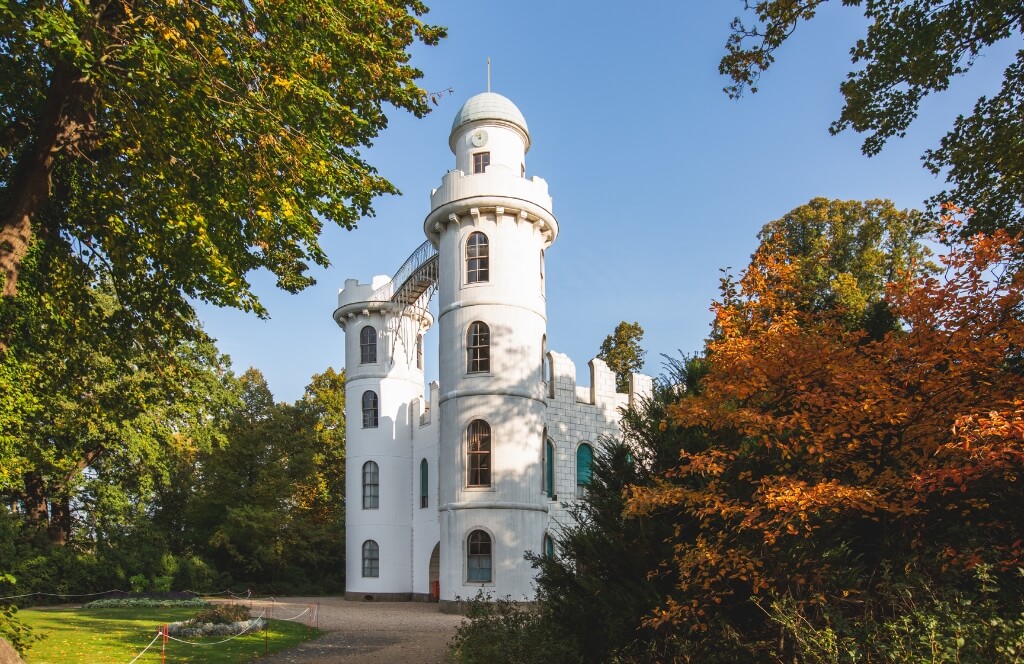
Peacock Island sits in the Havel on Berlin's southwestern edge, part of a UNESCO World Heritage site and one of the city's gentlest day trips - until the mist comes off the water.
King Friedrich Wilhelm II created it in the 18th century as a romantic retreat and built a folly of a palace on it, deliberately styled as a ruin, where he and his mistress Wilhelmine Enke could disappear from court. He filled the island with exotic animals and strange little buildings, including a Gothic dairy.
Wilhelmine is said to have never left. Visitors report her ghost in the palace, and the island has its own local monster legend attached to the waters near the dairy, plus the ghost of a young girl who walks the woods. It is a genuinely lovely place to spend an afternoon, which is what makes the stories land the way they do.
Know Before You Go
- Why it's haunted: Ghost stories have followed the island since the 19th century.
- Can you visit? Yes, the island is open daily and guided tours run regularly.
- Hours: Daily, 10:00 to 18:00.
- Admission: The island itself is free; the ferry crossing costs €6.
- Address: Pfaueninselchaussee, 14109 Berlin
6. The Forbidden City of Wünsdorf, Brandenburg
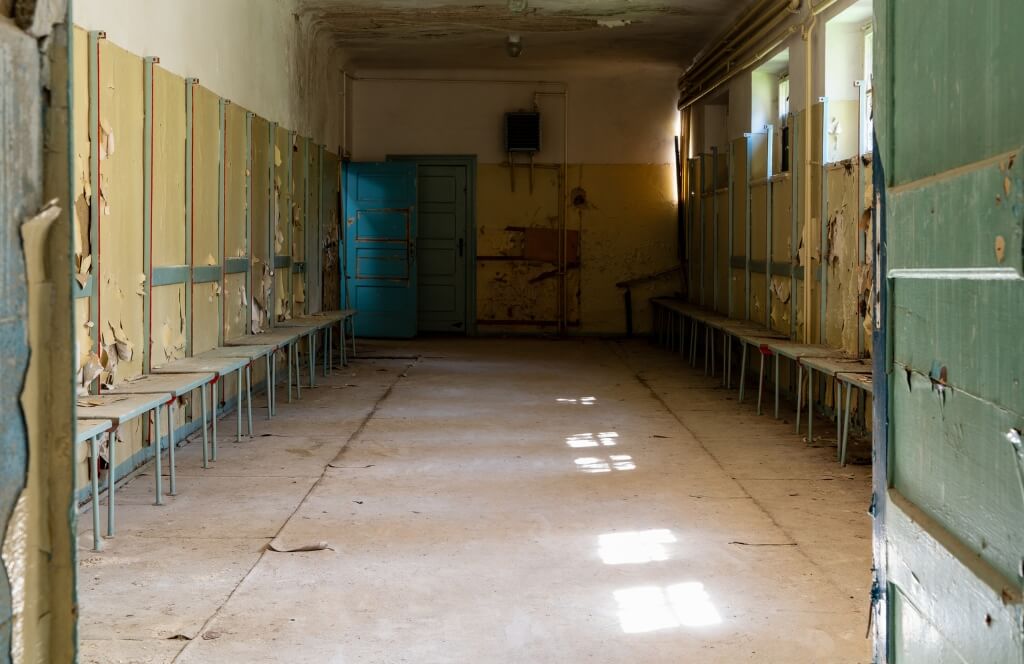
Wünsdorf was built as a Wehrmacht garrison and became, after 1945, the largest Soviet military base outside the Soviet Union.
This self-contained town of barracks, bunkers, offices and an officers' house was sealed off from the German public and guarded until the troops finally pulled out in 1994. Germans still call it the Forbidden City, and for fifty years the name was literal.
What the Soviets left behind was a town with nobody in it, and the stories arrived with the decay: the ghosts of dead soldiers walking the empty halls, sudden drops in temperature, dark shapes in the abandoned bunkers.
The strangest part of the modern site is what has grown up alongside all that - Wünsdorf has reinvented itself as a book town, and the historic buildings now hold secondhand bookshops you can browse before you go looking for the bunkers.
Know Before You Go
- Why it's haunted: Considered haunted since the Soviet withdrawal in 1994 left the complex empty.
- Can you visit? Yes - guided tours cover parts of the Forbidden City, and there's a self-guided walking route through the grounds.
- Hours (book town): Closed Monday; Tuesday to Friday 10:00–17:00; Saturday and Sunday 10:00–17:30.
- Address: Zehrensdorfer Str. 12, 15806 Zossen, Wünsdorf-Waldstadt
7. Bunker Valentin, Bremen
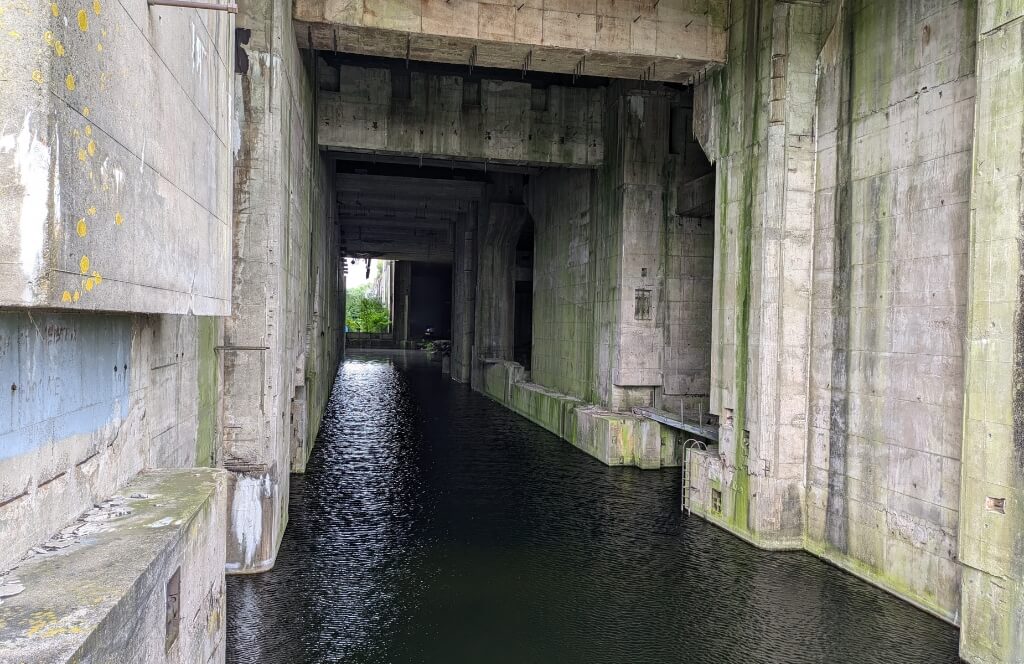
Bunker Valentin is the largest freestanding bunker in Germany and it was never finished.
It was meant to be a covered shipyard turning out U-boats on an assembly line, and it was built by forced laborers and concentration camp prisoners working in horrible conditions. Thousands died in its construction. The war ended before a single submarine left it.
It is a memorial site now rather than a ruin, and it is worth being clear about what makes it frightening: not the reported cold spots and echoes in the empty halls, but the arithmetic of the concrete itself. It's the only place on this list where the guided tour is the point rather than a compromise.
Know Before You Go
- Why it's haunted: Thousands of forced laborers died building it; it has been considered haunted since the 1970s.
- Can you visit? Yes - the Denkort Bunker Valentin memorial runs guided tours covering both the history and the ghost reports.
- Address: Rekumer Straße, 28777 Bremen
8. Hotel Waldlust, Freudenstadt, Baden-Württemberg
The Grand Hotel Waldlust opened in Freudenstadt in 1902 and spent the 1920s hosting exactly the people you'd expect a Black Forest grand hotel to host: King Gustav V of Sweden, silent film stars including Douglas Fairbanks, European aristocracy with too much luggage. After the Second World War, during which it served as a military hospital, it never got its shine back.
The first reports of unexplained phenomena surfaced in the 1960s. The focus of them is the room where Adi, the hotel's long-serving housekeeper, died in circumstances nobody satisfactorily explained. Former staff and visitors describe odd noises, elevators that move on their own and lights that flicker without cause; several investigations have come and gone without settling any of it. The building is looked after today by a preservation society, and it has become a fixture for ghost hunters, photographers and mystery documentary crews.
Know Before You Go
- Why it's haunted: Reports of hauntings date back to the 1920s and center on one room.
- Can you visit? Yes - guided tours run regularly, and the building also hosts events and concerts.
- Address: Lauterbadstraße 92, 72250 Freudenstadt
9. The Ghost Forest, Nienhagen, Mecklenburg-Vorpommern
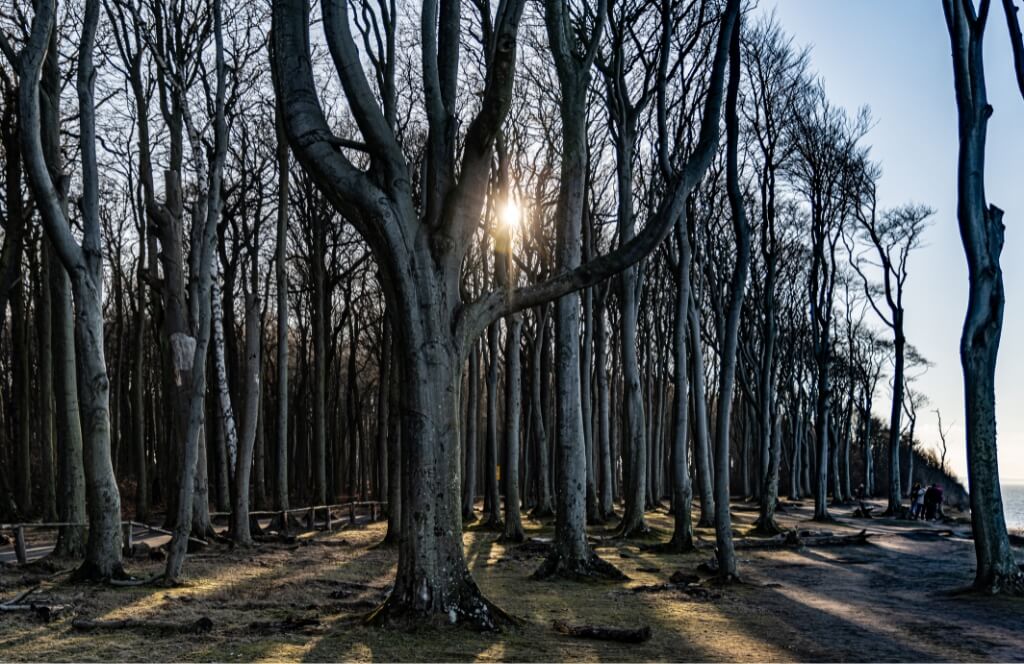
The Gespensterwald at Nienhagen is a strip of beech and oak on the Baltic coast that the sea wind has been bending out of shape for centuries.
The trunks lean and twist away from the water, the branches reach in the wrong directions, and the whole wood looks less grown than posed. Locals have told stories about it since the Middle Ages.
What visitors describe is less an apparition than an absence: an unnatural quiet between the trees, and the persistent feeling of being watched. It's at its best (or worst) at dusk and in sea fog, and it is the easiest place on this list to get to. You just walk in.
Know Before You Go
- Why it's haunted: The forest has carried a haunted reputation since the Middle Ages.
- Can you visit? Yes - no official tours, but the forest is open and accessible at any hour.
- Address: Gespensterwald, 18211 Nienhagen
10. Waldniel-Hostert Nursing Home, Schwalmtal, North Rhine-Westphalia
Entering is forbidden and you'll see it only from behind a fence, but leaving it off would be dishonest - this is one of the cruellest sites in modern German history.
Waldniel-Hostert began as a Catholic institution and became a home for children with disabilities. Under the Nazis it was absorbed into the euthanasia program, and the children in its care were killed there.
455 adults and 99 children died at Waldniel-Hostert. Visitors to the perimeter report children's voices and whispering from inside the ruins, and shadow figures in the corridors after dark. The former institutional cemetery is now a memorial and is open - which is the right way to visit this one.
Know Before You Go
- Why it's haunted: Hundreds of people, most of them children, were killed here; the site has been considered haunted since the 1950s.
- Can you visit? Not the buildings — entering is forbidden. The former cemetery is a memorial site and is open to visitors.
- Address: Waldnieler Straße, 41366 Schwalmtal
More Haunted Places in Germany
Ten is nowhere near all of them. If you're building a longer route, these are the next ones worth putting on it:
- The Ghost Villa, Verden, Lower Saxony — an abandoned early-20th-century villa whose owners are said to have vanished. A fire in October 2023 destroyed most of it and the shell is now structurally unsafe; look, don't enter.
- Spreepark, Berlin — the abandoned East German amusement park, complete with a Ferris wheel that still turns in the wind.
- Domsland Moor, Windeby, Schleswig-Holstein — a fog-bound bog where travelers were said to disappear, and where the Iron Age bog body known as the Windeby Child was found in 1952. Entering the moor is prohibited.
Haunted Places Beyond Germany
Germany is a strong start, not a finish. If you're chasing this kind of travel further afield, Europe has plenty of places to spend Halloween, and the rest of the year is fair game too.
And if the person who'd love this is someone else, a Flightgift gift card gets them to any of it — redeemable for flights with over 400 airlines, so they pick the ruin and the date themselves.
Haunted Places in Germany: FAQ
What is the most haunted place in Germany?
The Beelitz Sanatorium in Brandenburg is the most famous. Opened in 1902 as the largest hospital in Europe of its time, it served as a military hospital in both world wars and was held by Soviet forces until 1994, and two murders were committed on the site in the 1990s and 2000s. Guided tours cost €17.00 for adults and €12.00 for children and teens aged 7–17.
Can you legally visit abandoned places in Germany?
It depends entirely on the site. Official tours run at Beelitz, Wünsdorf, Bunker Valentin and Hotel Waldlust, and the Plague Chapel at Weilheim can be visited by arrangement. Kromlau Park with the Rakotz Bridge and the Ghost Forest at Nienhagen are freely accessible. Haus Fühlingen, Waldniel-Hostert and the Domsland Moor are off-limits, and the Ghost Villa at Verden is unsafe to enter after the 2023 fire. Trespassing on private or fenced sites in Germany can be prosecuted, so check before you go.
Are there haunted houses in Germany like the ones in the US?
Two different things share the name. Germany has no real tradition of the commercial walk-through haunted house that pops up across the US every October — the closest equivalents are the Halloween seasons at theme parks like Movie Park Germany and permanent attractions like the Hamburg Dungeon. What Germany does have in quantity is the genuine article: real abandoned buildings with real histories, most of them free or close to it.
When is the best time to visit haunted places in Germany?
October, without much competition. The light goes early, the Baltic and the Bavarian forests fog up, and the theme park Halloween seasons are running at the same time. The trade-off is that guided tours at sites like Beelitz and Hotel Waldlust book out fastest in the run-up to Halloween, so reserve well ahead.